Multi-Site Commercial Roof Planning: How to Prioritize a Property Portfolio
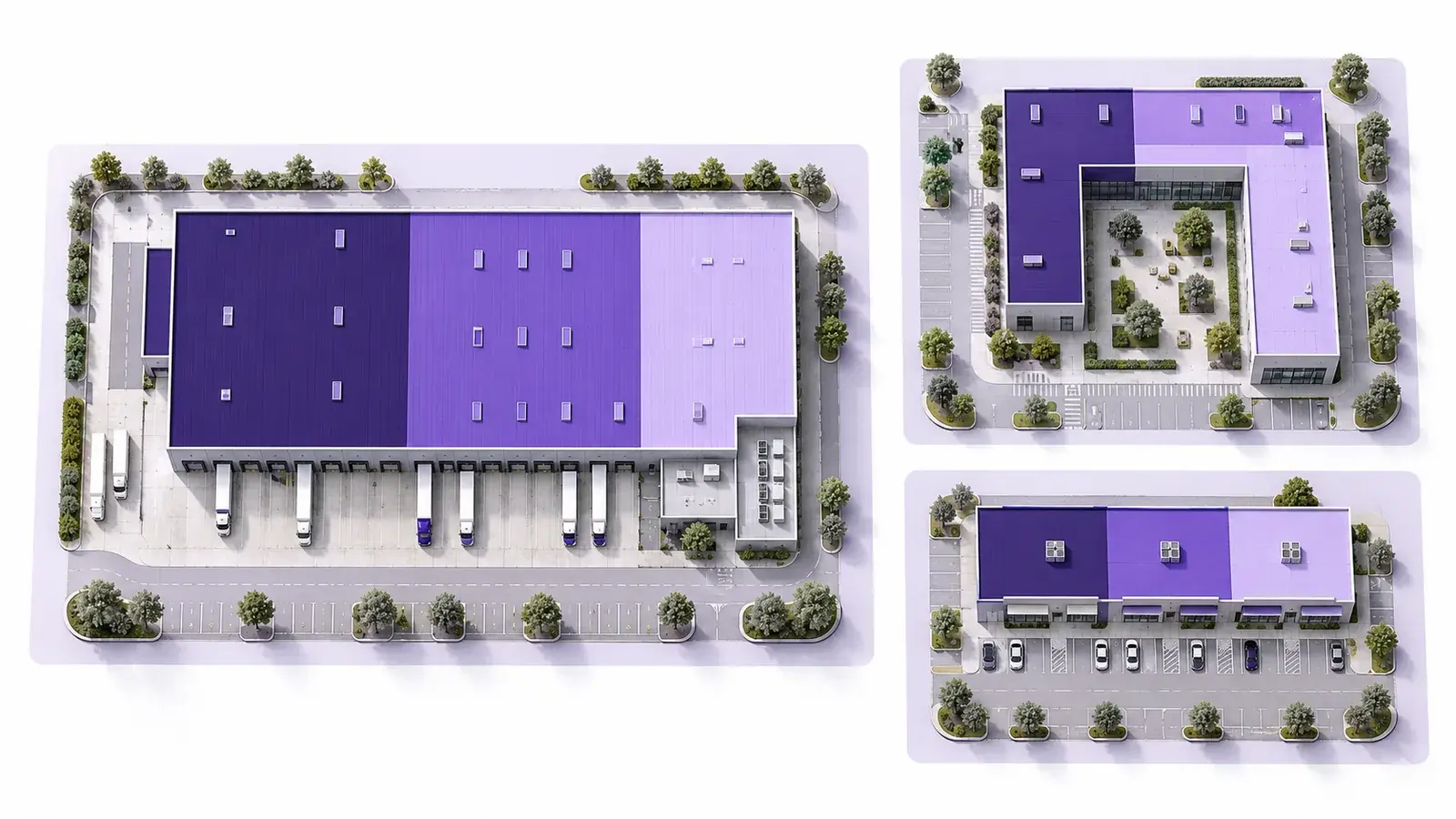
A facilities group has one roof leaking above temperature-sensitive inventory, another approaching its planned reroof year, and a third with no recent inspection at all. Which one gets the limited capital and service budget? Multi-site commercial roof planning needs an explainable decision record across occupied assets, including what has been confirmed and what still requires an assessment.
Build a comparable roof inventory
Start with each property, then separate roof sections where systems or installation dates differ. Record the address, building use, estimated area, system type, documented roof age, warranty, latest inspection, known deficiencies and maintenance history. Label unknowns. A portfolio database that silently substitutes building construction year for roof installation year will rank properties badly.
The roof age verification guide helps teams distinguish documented and estimated age signals. For every portfolio record, keep a source link and date so another manager can reproduce the finding without beginning from scratch.
Separate operational consequence from roof condition
Example: three roofs competing for one budget
The following fictional cases show why roof age alone cannot determine the order. They are prioritization examples, not engineering condition ratings.
| Site | Known condition / consequence | First justified action |
|---|---|---|
| Cold-storage facility | Documented leak near critical operations | Urgent qualified assessment; containment and repair decision |
| Warehouse Annex | Older assembly; stable recent inspection | Plan medium-term capital review |
| Retail Center | No recent inspection; warranty status unknown | Obtain records and inspect before ranking |
Two roofs with similar visible defects may demand very different responses. A minor leak over sensitive manufacturing equipment could disrupt operations immediately; a larger defect over an unused storage area may present a different exposure. Prioritization should consider people, property, business interruption and building criticality along with actual observations.
Avoid a single magic score that conceals its inputs. A simple matrix with condition, operational consequence and evidence confidence is often easier to audit. If the condition has not been inspected, mark it “unverified” rather than inventing a low risk simply because no complaint has been filed.
When presenting this portfolio to finance, keep three separate columns: evidence-backed roof condition, business consequence if service is interrupted, and confidence in available records. Do not average a missing inspection into a reassuring “low-risk” score. If a claim depends on a roof system life estimate, show its source rather than adopting an arbitrary age threshold.
Create separate action queues
An effective portfolio plan distinguishes urgent response, scheduled repair, further investigation and long-range replacement planning. A roof with active water intrusion belongs in a different workflow from an aging but dry roof approaching a budget review. This prevents the capital plan from becoming a list of unrelated service tickets.
Each queue should name a decision owner, target timeframe, evidence still required and expected next step. Do not label a roof for replacement solely because the building is old. The commercial roof replacement budget guide can help frame planning assumptions once a qualified assessment identifies candidate work.
Make geography and crew capacity part of the schedule
Multi-market owners face travel, seasonal weather and contractor availability. Group routine inspections geographically where doing so does not delay urgent work. Plan rooftop access with facility contacts, especially where security or business hours restrict entry. Coordinate related HVAC or solar work to avoid redundant site visits and undocumented roof penetrations.
Storm exposure also varies within a portfolio. Treat historical events as a reason to review documentation or schedule appropriate inspections, not as proof of damage. The storm intelligence guide explains how weather context should be kept separate from field findings.
Turn scattered roof records into a capital sequence
For each roof, document near-term maintenance costs, confirmed repair needs, likely replacement planning horizon and the uncertainties that could move the schedule. A three- to five-year view can help owners spread large expenditures, but its usefulness depends on updating conditions after inspections and repairs.
When several buildings compete for a limited budget, explain the tradeoff in operational terms: what condition is known, what happens if work is deferred and what information would change the decision. A board or asset manager needs defensible priorities, not a spreadsheet full of unexplained red cells.
Test the priorities against real constraints
Before accepting the ranking, ask facility managers to review the top properties and explain any operational facts missing from the dataset: night-shift access, refrigeration, critical inventory or a recent undocumented repair. A short review meeting often corrects errors that no property database could discover remotely. Then publish the final priorities with their assumptions and unresolved questions.
Use one documentation system across sites
Different contractors may use different terminology and inspection formats. Standardize roof-section labels, photo naming, deficiency categories and closure records. Preserve the original contractor report alongside normalized portfolio fields. Good standardization reduces repeat visits and allows trend comparisons without erasing technical detail.
The CapXos commercial property map supplies property research context, while the free Inspect and Takeoff web tools capture section-specific photos, field notes and quantities. Confirm data availability per property. It is a useful part of an evidence workflow, not a substitute for an owner's complete asset-management or capital-budgeting system.
Frequently asked questions
What is commercial roof portfolio management?
It is a process for documenting, inspecting, maintaining and planning capital work across multiple commercial roofs using consistent information.
Should the oldest roof always be replaced first?
No. Priorities depend on confirmed condition, operational consequence, maintenance history, technical options and the quality of available evidence.
What information belongs in a multi-site roof inventory?
Include property and roof-section identifiers, system type, source-supported age, warranty, area, inspections, defects, repairs and responsible contacts.
How often should a portfolio ranking be updated?
Update it after material condition changes, significant events, major repairs and scheduled inspections. A stale ranking can be worse than no ranking.
Can a roof risk score replace inspection?
No. A score can help allocate research, but decisions about roof condition and scope require appropriate property-specific evidence.