Commercial Roof Flashing Failures: A Field Guide to Parapets and Penetrations
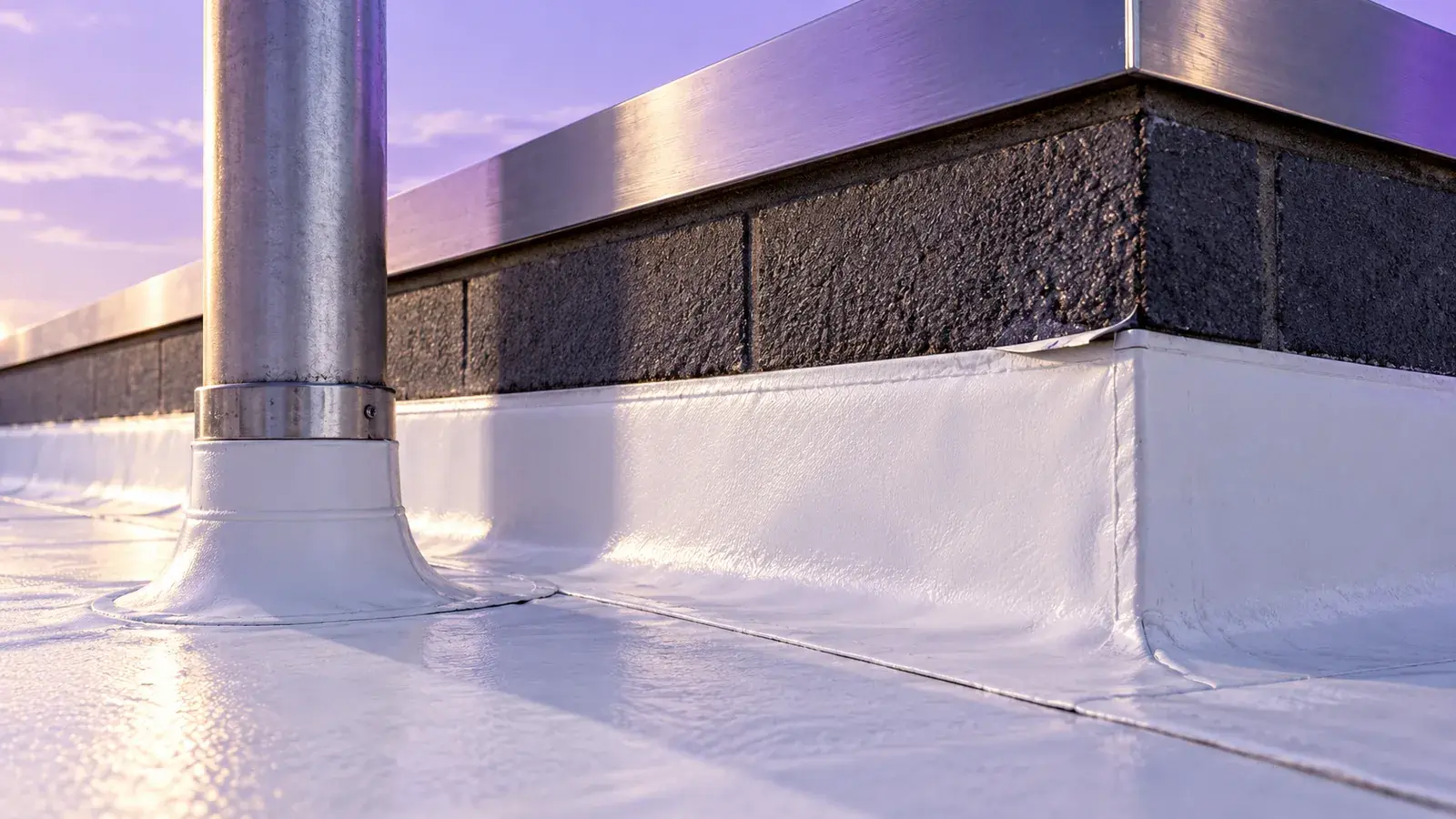
A leak beside an exterior wall can originate in a roof membrane, a parapet coping joint or the wall itself. Repeatedly patching the horizontal membrane without tracing those transitions can leave the underlying entry path untouched. Commercial roof flashing is a system of interfaces, and useful diagnosis starts by mapping which assemblies meet at the leak location.
Separate the field membrane from its terminations
The roof field handles water across a broad surface. Flashing carries that protection over vertical surfaces, around pipes, through curbs and into edges and terminations. Movement, wind, rooftop service work and incompatible repairs make these junctions demanding. When an indoor stain appears several feet away from its entry point, a failed joint is one plausible cause, not a proven one.
For the initial site walk, use the commercial roof inspection checklist. The investigation here becomes more specific: identify the seam, metal, sealant and wall details that could permit water behind the assembly.
Parapets are roof-and-wall systems
A typical parapet condition can include base flashing, termination, counterflashing, coping metal, joints and the wall construction beneath. A loose coping cap may admit water behind an otherwise intact roof base flashing. A defective counterflashing termination can let runoff bypass the membrane's intended protection.
Do not assume that applying sealant to the visible joint is a complete repair. Photograph both sides of the wall where safely accessible, note coping joints, movement, termination condition, wall cracks and signs of previous work. Refer to the approved design and current roof manufacturer's details before deciding what must be removed or rebuilt.
Equipment curbs and roof penetrations
HVAC curbs, pipe boots, supports and conduit crossings bring other trades onto the roof. Look for changed equipment footprints, new fasteners, cut-and-patch zones, compressed insulation and unrecorded penetrations. The facility team may know that a unit was replaced last month even though the roof-maintenance file has no entry.
That history matters. Water that first appeared after a mechanical retrofit deserves a timeline review, while a leak after wind-driven rain may direct attention to open edges or failing perimeter details. Neither correlation proves a single cause.
A three-zone investigation example
A store reports stains near a parapet at the rear loading area. Zone A is the roof-to-wall turn-up. Zone B is the metal coping and its joints. Zone C is a nearby roof drain. Inspect each zone, document water paths and note any prior patches before proposing work. If the drain is obstructed, that is relevant exposure information; it does not rule out a separate leak through coping metal.
The commercial roof drainage guide explains how to evaluate ponding and outlets. Keep the diagnoses separate until evidence connects them.
Design the repair record around a detail, not a vague task
A good work order states the roof section and exact detail; identifies the existing membrane and flashing assembly; describes observed deficiency and uncertainty; names the repair method after qualified assessment; and records the materials, photographs and final check. “Seal flashing” is not a reproducible scope. “Remove and reinstate the manufacturer-approved termination at the north parapet between grids B and C” is substantially clearer, but must only be used when that scope is actually supported.
If a manufacturer's roof guarantee is in force, check authorization and material restrictions before making nonemergency changes. The commercial roof warranty guide covers the relevant paperwork.
Make repeat leaks easier to investigate
Assign stable identifiers to curbs, drains, parapet elevations and roof sections. Preserve the first documented observation rather than overwriting it after a repair. CapXos Inspect can attach field photos and notes to the matching roof section, and Takeoff can retain relevant edge lengths and penetration counts for estimating. These records reduce repeat investigation, but physical diagnosis remains site-specific.
Keep the competing explanations visible
For recurrent leakage, record at least two plausible water paths and the observations that support or contradict them. A new stain following wind-driven rain may point to exterior wall or coping details; water that appears after an HVAC service visit may implicate a curb; ponding after every storm suggests drainage exposure. Those are investigation leads, not diagnoses. A short timeline combining rainfall, maintenance visits and repair attempts often prevents a third identical patch at the wrong location.
Frequently asked questions
Is a parapet leak always caused by failed base flashing?
No. Coping, wall construction and counterflashing may also be involved.
Can new HVAC equipment create roof leaks?
Penetrations and service work can affect a roof, but the actual entry point must be verified.
Should contractors repair every cracked sealant bead?
The repair method depends on the assembly and manufacturer detail; sealant alone may be insufficient.
Why can a ceiling stain be away from the roof entry point?
Water can move laterally through concealed materials before appearing indoors.
What makes a flashing report usable?
A precise location, photographs, assembly context, confirmed findings and a traceable repair history.