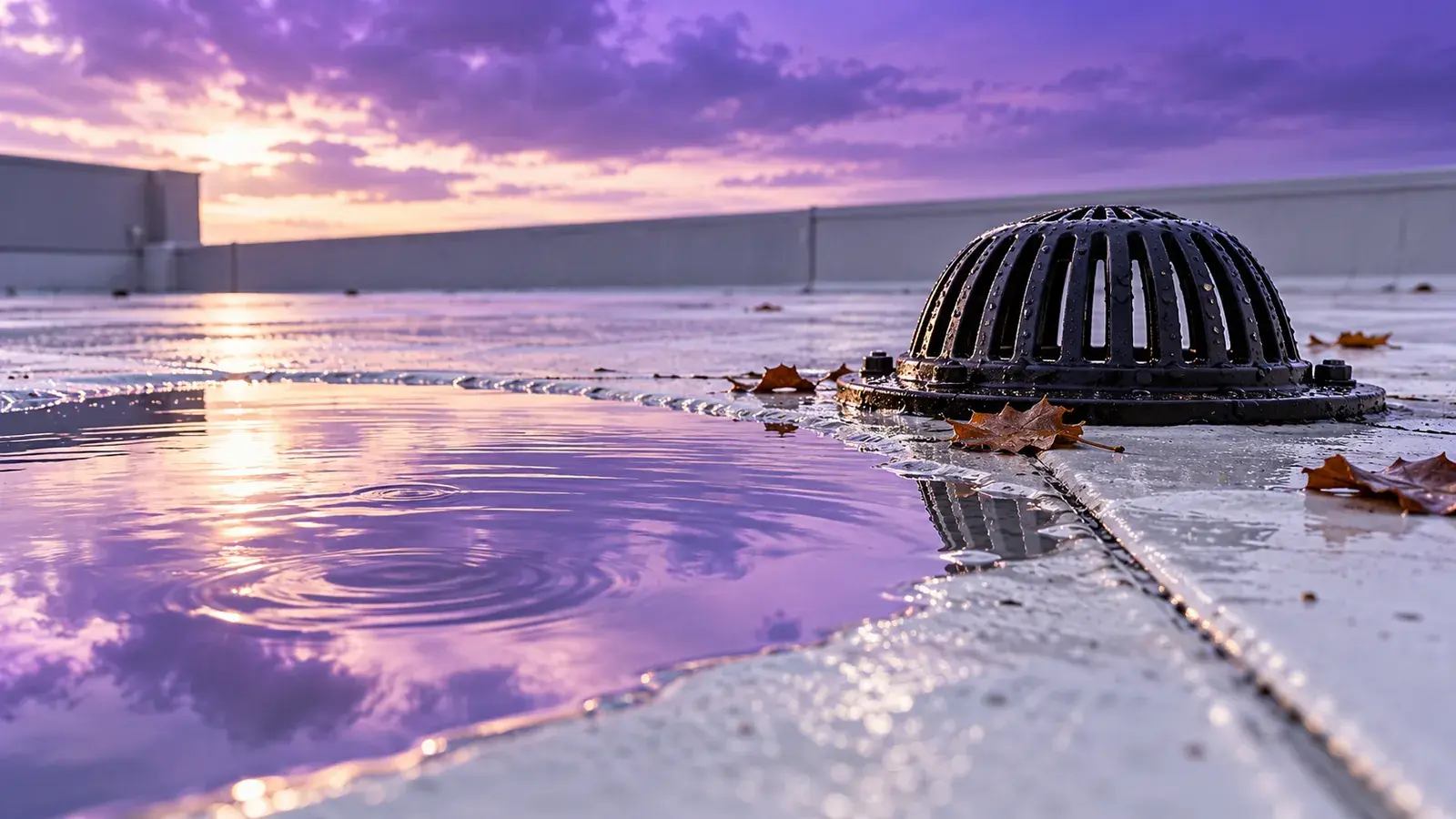
The interior stain is under a tenant corridor; the closest roof drain is on the other side of an equipment curb. A technician cannot solve that problem by labeling every low spot “ponding.” Commercial roof drainage investigation should reconstruct the intended water path, locate restrictions and document the timing of water accumulation before selecting repairs.
Map the intended drainage path
Before diagnosing ponding, identify roof slopes, internal drains, scuppers, gutters, overflow routes and any tapered insulation. A low-slope roof is designed to move water through particular points; an obstruction at one drain can change conditions over a large roof section. Draw or annotate the drainage layout so the next inspector can locate every observation.
Note the location of rooftop equipment and curbs because they can interrupt runoff paths. Check for previous repairs around drains or crickets that may have altered the slope. The roof measurements and takeoff guide provides useful methods for recording areas and lengths, but drainage conclusions require a site-specific assessment.
Distinguish temporary standing water from a persistent problem
Sample drainage observation, written for follow-up
Hypothetical field note: “Roof section B, drain D-02, north of RTU-3. Debris ring approximately 7 feet from the strainer. Photo 12 taken 36 hours after the owner-reported rain event. Depth not measured. No active interior leakage confirmed at this location. Check drain condition when safe and compare after the next event.” This preserves what the visit established without diagnosing slope failure from one photograph.
For technical context, the NRCA discussion of roof slope and ponding explains why short-duration ponding must be distinguished from water that persists. The applicable roof design, assembly and manufacturer requirements still govern the site-specific response.
Water visible during or immediately after rainfall is not automatically evidence of a defect. Duration, depth, repeated location and the roof system's design matter. Document the time since rainfall, recent precipitation and weather conditions. When safe and appropriate, compare photographs from multiple visits rather than inferring persistence from a single snapshot.
Some manufacturers and roof specifications discuss ponding thresholds, but those requirements vary. Do not apply one universal number to every assembly or infer a warranty breach from a photograph alone. Consult the project's design documents and manufacturer instructions.
Inspect drains without creating new hazards
Debris, vegetation, sediment and damaged strainers can obstruct flow. Check visible components and whether runoff has a clear route to the outlet. Building operations may need a qualified maintenance team to clear obstructions safely. Do not enter a roof during lightning, high winds or other unsafe conditions, and do not remove protections or open assemblies without authorization.
At the perimeter, examine scuppers, downspouts and overflow provisions. A blocked primary drain is serious, but an unavailable overflow path can compound the consequences during extreme rainfall. Any suspected structural loading issue or unusually deep standing water warrants prompt specialist attention.
Look for secondary signs of repeated moisture
Even when the roof is dry, staining, debris rings, sediment accumulation, vegetation, repeated patching or low areas can indicate where water has collected. Observe seams, flashing transitions, penetrations and membrane condition around those zones. These are clues for further investigation, not proof that the insulation or deck is wet.
If hidden moisture is suspected, appropriate testing by qualified professionals may be needed. The commercial roof inspection checklist helps document the wider roof condition so drainage observations are not separated from neighboring details.
Trace a leak with evidence, not assumptions
Water can travel along the underside of an assembly, structural components or penetrations before appearing inside. Start with a documented interior location, weather chronology and roof plan, then investigate plausible paths. Keep the suspected entry point separate from the confirmed observation. If the evidence is inconclusive, say so.
A good report includes annotated roof images, drain labels, water locations, photographs, conditions at the time of inspection and recommended next diagnostic steps. Avoid promising that cleaning a drain will solve an unrelated seam failure or that resealing an obvious detail addresses all water intrusion.
Keep drainage records useful between inspections
A single roof diagram with consistent outlet numbers is often more valuable than dozens of unlabeled photographs. Note the direction of surface flow where it can be observed, roof areas feeding each outlet and whether interior stains align with possible drainage paths. Future crews should be able to compare conditions after another storm without reconstructing the entire site visit.
Turn findings into the right scope
Depending on the cause, the next step may be housekeeping, localized drain work, membrane repair, slope correction, drainage redesign or broader roof assessment. Those options have different cost and permitting implications. Complex drainage modifications may require design professionals and code review, particularly when structural loads or overflow provisions are involved.
CapXos offers free Inspect and Takeoff web tools for associating photos and spoken observations with roof sections and recording areas, lengths and counts. Use them to preserve location-specific evidence before preparing a scope. The goal is to support a qualified diagnosis, not to make a remote conclusion about the roof's condition.
Frequently asked questions
Is standing water on a commercial roof always a defect?
No. Consider its duration, depth, location and roof design. Persistent ponding deserves evaluation, but one post-rain photograph does not establish a failure.
Can a clogged drain cause a commercial roof leak?
It can contribute to water accumulation and exposure at vulnerable details, but an inspection is needed to identify the actual entry path.
Does ponding water automatically void a commercial roof warranty?
No universal rule applies. Review the specific manufacturer guarantee, approved assembly and conditions.
How should inspectors document commercial roof drainage issues?
Label outlets and roof sections, record weather timing, photograph recurring low spots and note observed conditions separately from suspected causes.
When is a drainage problem more than routine maintenance?
Suspected structural loading, recurrent significant ponding, failed overflow routes or repeated water intrusion can require prompt qualified assessment and possibly redesign.