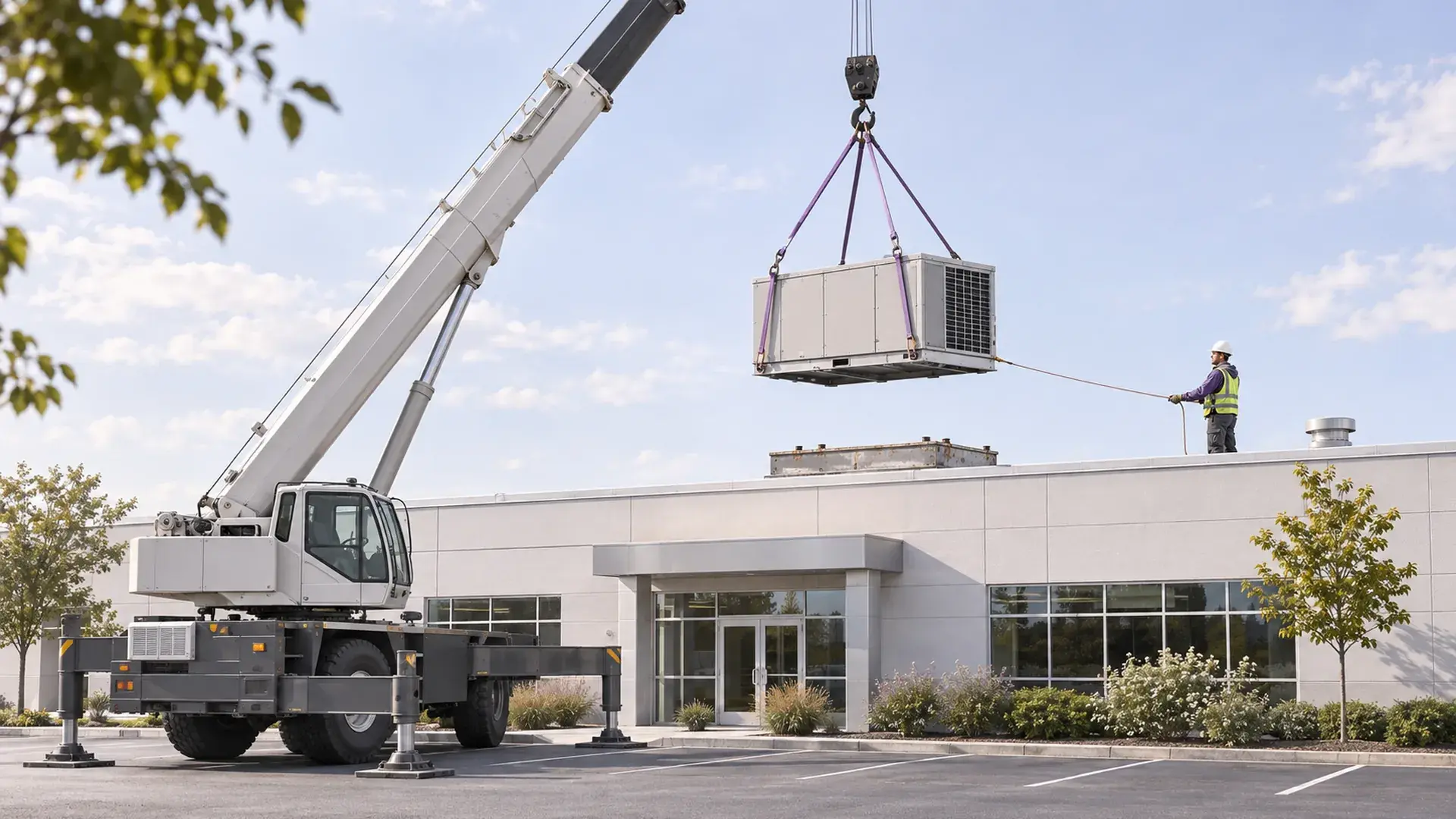
A rooftop HVAC unit may be replaced without replacing the surrounding commercial roof. Even so, equipment changes can involve curbs, flashings, penetrations, access routes and temporary protection. Roofing contractors interested in rooftop HVAC permit leads need to understand those interfaces and the project team responsible for them. The opportunity is tied to a defined roofing scope, not to the assumption that every mechanical permit means the roof has failed.
Read the permit description before contacting anyone
A permit for a unit replacement might describe a like-for-like swap on an existing curb, a new curb, a structural modification or a broader mechanical renovation. The roofing implications differ. A direct replacement may require limited inspection and temporary protection; an altered curb can require integration with the roof assembly and coordination of manufacturer requirements. In other cases the mechanical contractor already has a roofing subcontractor, or no roofing change is needed.
Screen records for the actual building and jurisdiction. Check dates and status carefully. A closed permit from last year can still provide useful information about the roof, but it is not a current bid invitation. A new application may be preliminary and subject to plan review. Treat descriptions with missing scope as research prompts and seek clarification from the project participants before putting the record into the active sales queue.
Identify which trade owns which detail
Commercial roof penetration repair is a specialized part of the interface between roofing and mechanical work. The roof contractor may need to address waterproofing at the curb or penetration; structural and equipment design remain with the appropriate professionals. The property owner, mechanical contractor and general contractor can each hold a different part of the contract. Confirm responsibilities in writing before estimating. This prevents duplicate bids or unsafe assumptions about who is authorized to alter the assembly.
CapXos provides property-level commercial-roof research at https://capxos.com/. It can help verify the address and review available roof history before the contractor contacts the HVAC coordinator or property manager. Approved equipment details, roof-system requirements and actual access must come from the project team. A rooftop-unit change creates a possible conversation, not automatic evidence of billable waterproofing work.
Find work during planning, not after waterproofing is closed
The best time for a roofing subcontractor to discuss details is before equipment installation. Ask whether the project includes curb modifications, rooftop access protection or restoration of affected sections. If the work is already contracted, there may still be a future service relationship, but do not pursue it as if the job were unawarded. For new equipment, request information about the roof membrane, insulation, existing warranty and how the mechanical scope will be staged around occupied facilities.
A simple introduction can be useful: the roofing company services that type of roof and is available to coordinate properly specified flashing and waterproofing work if needed. Avoid a scare-based message suggesting an HVAC installation necessarily causes leaks. Credible contractors explain the interface risks without inventing defects, and they are prepared to say that the existing design may be adequate.
Frequently asked questions
Is an HVAC permit evidence of roof damage?
No. It records mechanical work and may create an interface requiring roofing attention, but roof condition must be evaluated separately.
Can roofing contractors quote work without the mechanical drawings?
They may discuss preliminary scope, but accurate pricing should depend on approved equipment and curb details, roof system requirements and access conditions.
Who authorizes work around rooftop equipment?
The contracting arrangement varies. Confirm the property owner's requirements and whether the mechanical contractor or general contractor controls the roofing scope.