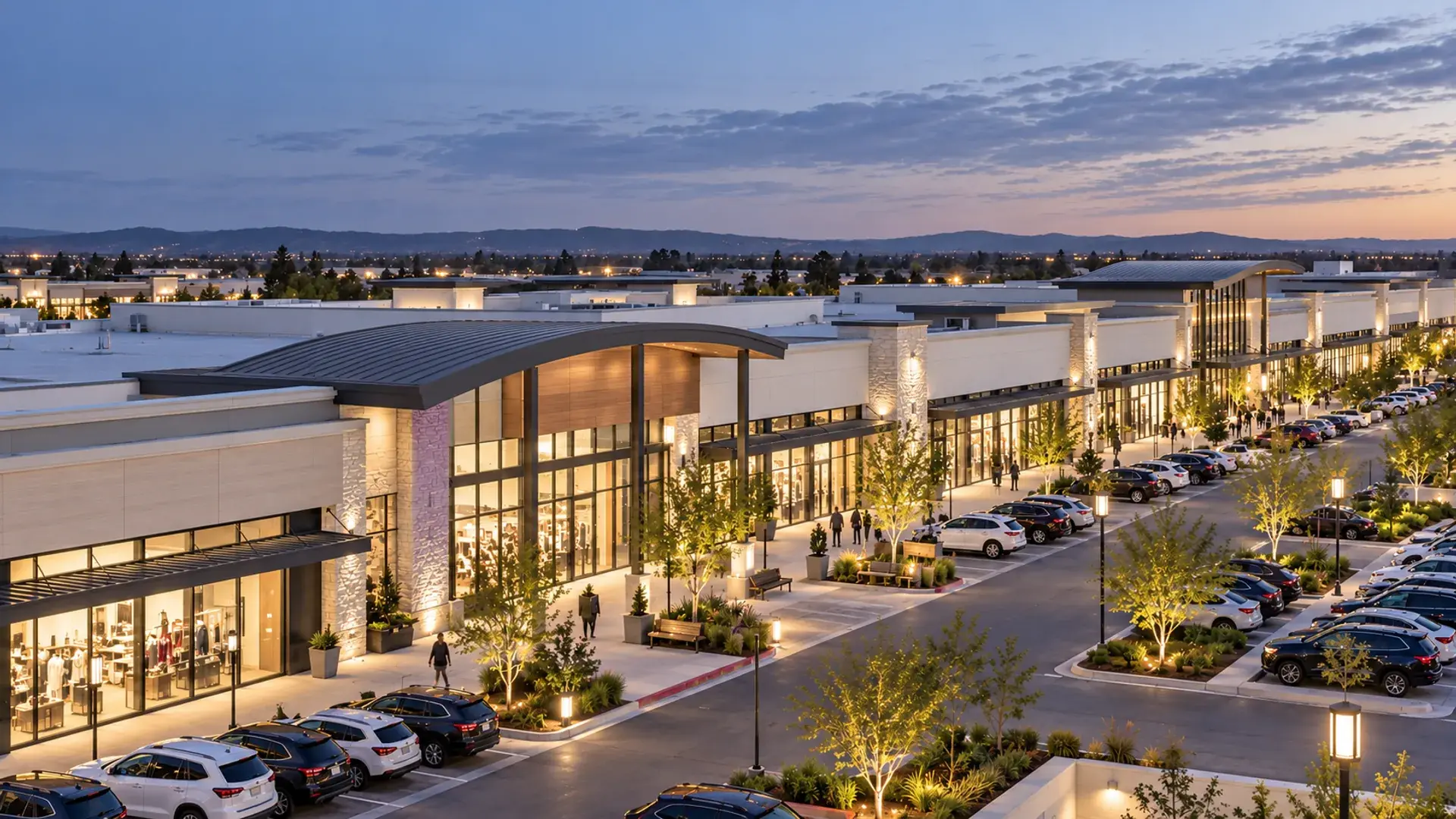
Retail center roofing leads are usually account-based: one manager may control roofs across multiple buildings. A leaking roof over a busy shopping center can involve a landlord, property manager, tenants, and a regional facilities team. Finding the building is the easy part; identifying who controls the roof work takes research.
Distinguish shopping centers from corporate retail portfolios
A shopping center often has a landlord or management company responsible for shared roof areas, while individual tenants control their spaces under lease terms. A national retailer may lease some facilities and own others; its maintenance group may be involved in roof complaints without holding authority for a full replacement. For shopping center roofing leads, first establish the property-level owner and management entity rather than assuming the most visible brand is the buyer.
Multi site commercial roofing leads can include strip centers, enclosed malls, big-box properties, outlet centers, and stand-alone stores. Each group presents different access, traffic, tenant-coordination, and contract structures. The selection rule should reflect where your company has relevant service capacity, not simply which retail logos are most recognizable. Large chains may use centralized vendor programs that are difficult to enter without references and established coverage.
Build a hierarchy of account, center, building, and tenant
A useful research model stores the parent ownership or management account, each property address, each building footprint, and tenant details only where relevant to access or service. This prevents a retail center's ten tenant suites from being counted as ten roofs. It also makes it possible to identify multiple centers administered by one regional property manager without merging their distinct repair histories.
For retail property roofing contracts, note whether roofing work is procured by the owner, a third-party property manager, a corporate facilities department, or a general contractor overseeing an expansion. A tenant complaint may create an inspection request, but only the authorized entity can approve the contract. Document who grants access, who approves estimates, and who ultimately pays.
How can a roofer get contracts with shopping centers or retail chains?
A shopping center may appear as 20 businesses in an online directory even though one landlord controls the roof. Conversely, a national retailer may lease stores whose roofs are maintained by separate landlords. A contractor looking for commercial retail roofing contracts should map the property and purchasing arrangements before contacting anyone. Tenant managers often cannot approve work on the building envelope.
Search commercial retail roofs in your territory using the CapXos map, then group the buildings by center, owner or management account where you can verify those relationships. Record which roofs your company could service on short notice, which require special after-hours procedures and whether the portfolio crosses state or crew-coverage boundaries. A Property Snapshot may help investigate a selected location, but it should not be mistaken for proof of who signs the contract.
An effective first proposal for a retail group shows a plan for reducing tenant disruption: roof-section identification, controlled site access, photo documentation and consistent estimates. When a buyer authorizes a site visit, Inspect and Takeoff can help the crew create that documentation. This is what can turn a researched shopping-center address into a professional sales conversation.
Research the retail roofs, then sell to the account
For a retail center, the roof is often shared while storefront names change. That makes a location-based map more useful than a tenant contact export. A contractor can identify the roof sections associated with a center, establish whether the site fits its maintenance capabilities, and then investigate the actual owner or management company. For a national chain, the same research can reveal whether several properties in one service area are worth discussing together.
The same chain may occupy dozens of roofs, but it rarely buys roofing work one storefront at a time. Use the CapXos commercial roof map to locate several relevant shopping centers or standalone retail buildings and record what can be verified about each roof. A Property Snapshot may help with further research on a selected building. Then establish whether roof contracts belong to the center owner, a third-party manager or the chain's facilities department before approaching the account.
Find service opportunities based on documented needs
Public property records, building footprints, weather history, and available roof-permit activity can help a contractor choose centers for research. They cannot tell you that a shopping center is leaking or ready to replace its roof. Construction changes may relate to tenant improvements and not roofing; an older building may have undergone a recent replacement. Mark such signals as research leads until the facility team confirms a relevant issue or planned project.
Recurring problems at occupied retail sites can include rooftop equipment interfaces, drainage, flashing near parapets, and the need to coordinate repairs around trading hours. Those are plausible inspection considerations, not diagnoses from aerial imagery. The outreach proposition should be a credible inspection or service capability rather than an unsupported statement that the property has damaged roofing.
Sell the operational benefits of consistent service
For a manager responsible for several centers, the contractor's process can matter as much as installation expertise. Standardize response times by territory, inspection-photo formats, repair documentation, and communications with on-site teams. Offer clear escalation rules for suspected active leaks or weather-related events. A service contract should define coverage and response conditions, not imply unlimited emergency capacity.
A retail portfolio buyer may appreciate a single reporting format covering many buildings. That does not mean the roofing contractor must promise one fixed price across different systems or locations. Distinguish routine inspections and minor service from separately scoped major replacements. A carefully bounded pilot with two or three centers may be more credible than proposing a nationwide program with insufficient field coverage.
Investigate capital and renovation activity carefully
A center refurbishment or major tenant turnover may lead to roof modifications, penetrations, equipment changes, or a larger construction project. Verify the actual scope through public plans where available and conversations with project representatives. Work may be awarded through an existing general contractor, especially when it forms part of a broader renovation rather than a stand-alone roof contract.
When a legitimate upcoming project is identified, record its status: early planning, scope development, bidding, awarded, or in progress. A permit issued after the roofer has been selected should not be treated as a newly available retail center roofing lead. However, the underlying account may still be suitable for future maintenance or related buildings if outreach is appropriate.
Track accounts instead of counting names
Measure portfolio contacts established, sites assessed, authorized visits, proposals submitted, service agreements signed, and repeat work. Count each opportunity at its actual property rather than multiplying one portfolio agreement into dozens of separate sales wins. Preserve evidence of which manager gave authorization and which roofs are covered by a contract.
CapXos can contribute to initial commercial property and roof research, particularly when a contractor needs to inspect building context across a territory. Account authority, service requirements, and procurement details still need verification. The practical goal is to enter conversations with relevant retail properties organized by who buys the work and how the contractor can actually deliver it.
Choose one retail account with buildings inside your coverage area. Use the free CapXos map to study a few actual roofs, document who manages them and prepare a concise service or inspection proposal appropriate to that organization. Show that your crews can work around retail trading hours. The homepage's Request a demo option is available if you want to use CapXos to research additional properties in that account.
Frequently asked questions
Who hires roofing contractors for shopping malls and retail properties?
Often the owner, landlord, property manager or a centralized facilities team. Verify who controls the roof before contacting individual tenants; that authority differs by lease and management arrangement.
Should a roofing contractor contact each tenant at a shopping center?
Usually it is better to determine who controls roofing decisions first. Tenants may report problems but not approve roof work under their leases.
What makes multi site commercial roofing leads valuable?
A verified management relationship can create several legitimate future service opportunities, provided each property's scope and authorization are confirmed separately.
How can contractors prepare for an initial retail-property roofing discussion?
Identify the owner or property manager, confirm the sites under its control, review available property and roof history, and offer a suitable inspection or maintenance discussion. A researched building is not an awarded contract.