Commercial roofing firms often learn about a potential job after a manager has invited several contractors to submit prices. Owner-direct work follows a different path. The contractor identifies a suitable property, builds a legitimate relationship with the responsible party and is available when the owner needs inspection, maintenance or replacement planning. Owner direct roofing contracts do exist, but they are subject to procurement policies, insurance requirements and the owner's preferred vendor arrangements.
Find a useful reason to speak with the owner
An unsolicited request for a large reroof contract usually arrives too early. Start with the kinds of information an owner might already be evaluating: roof age records, deferred repairs, an upcoming facility expansion, repeated service calls or the need to compare capital projects. Public data can help select buildings where such a conversation might make sense. It cannot establish that the owner has an open budget or is dissatisfied with the current roofing contractor.
A targeted commercial roofing owner outreach program should focus on the property and a plausible service question. For example, a contractor specializing in occupied warehouses could offer an appropriately scoped roof-condition review for a local distribution facility. The proposal should explain what the contractor can inspect, how access would be arranged and what the owner would receive afterward. Do not offer a free investigation that actually creates unpriced obligations the company cannot fulfill.
Offer a first step that builds confidence
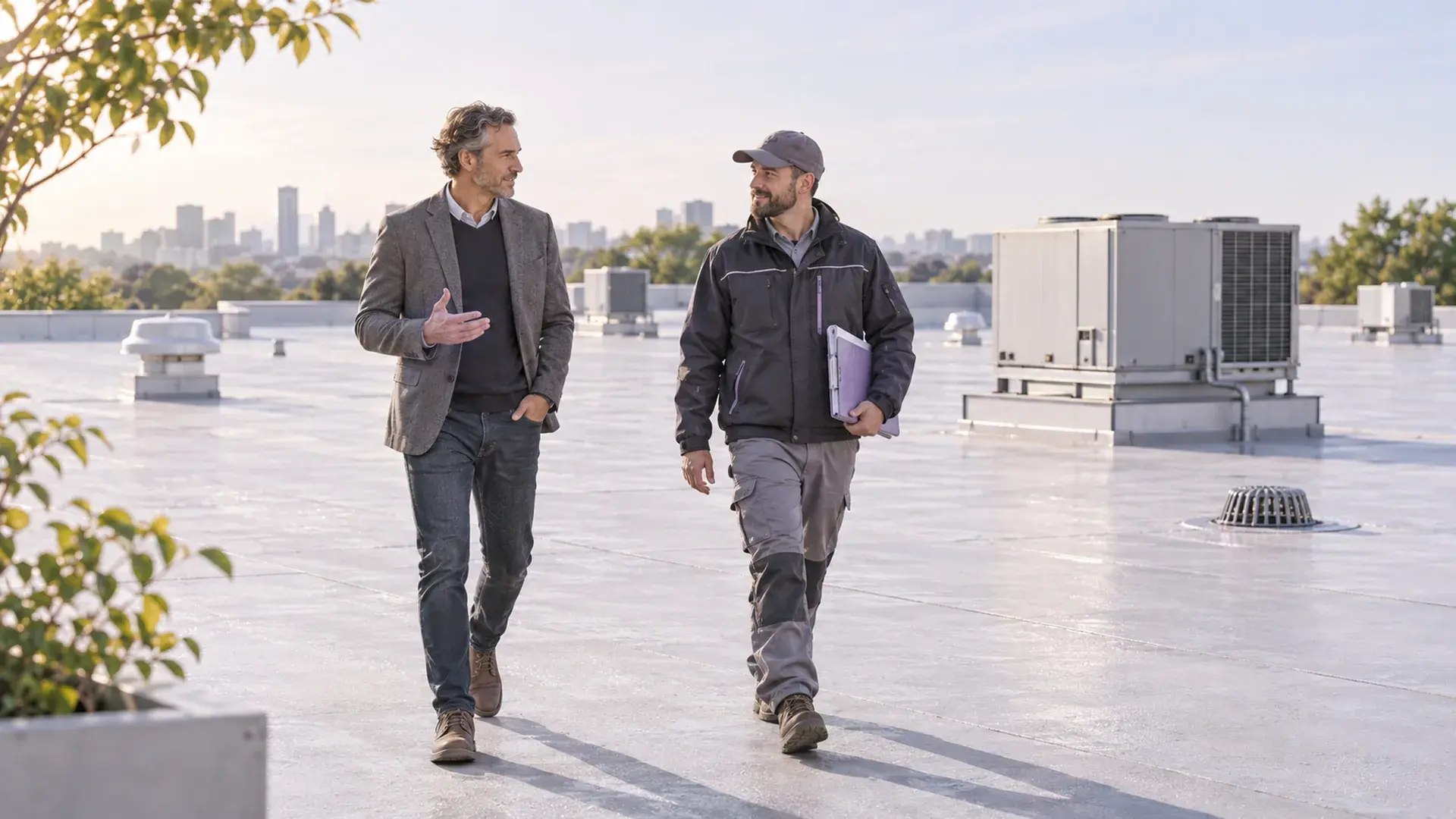
If the owner is interested, propose a site meeting with a defined agenda: review current roof documentation, identify access constraints, understand prior leaks or repairs and agree on what an inspection should cover. After authorization, document observations without implying that every anomaly requires replacement. If repairs are sufficient, say so. A credible contractor helps an owner make a defensible decision, which can be more valuable than a rushed proposal based on incomplete information.
For buildings with uncertain timing, ask when budgets are set and who reviews roof conditions. Set follow-up around that cycle rather than making repeated calls without a reason. If the owner uses competitive bidding, respect the process and offer to complete prequalification requirements. Owner-direct prospecting should never be sold as a way to bypass procurement obligations.
Measure progress before the first contract
The earliest measurable outcomes are access to the right contact, agreement to review site information, authorized inspections and invitations to quote. A contractor might need several conversations before a capital project becomes active. Record stage and evidence for every account. A warm relationship with a facilities director is useful even if the building has no immediate roofing work, but it should not be entered as a guaranteed contract.
How can I get a commercial roof job without waiting for bids? Identify properties that fit the company's service area, then arrange a professional introduction to the person overseeing roof maintenance. A contractor may reasonably ask, “Can I contact a building owner before they request roofing quotes?” An early contact is appropriate when it has a clear purpose: learning about inspection cycles, vendor registration and planned work. It must respect the owner's purchasing rules. If formal tenders are mandatory, the conversation can still establish how to qualify for future invitations, without claiming that the property has an open roofing contract.
Owner-direct outreach works best when the contractor makes the owner's next decision easier. For an industrial building that may require a capital review, this could mean offering a defined inspection plan and a list of records needed before estimates can be compared. For an office property with occasional leaks, it might mean introducing the company's diagnostic process and normal service area. Neither approach requires a claim that the owner is already shopping for roofers. If a manager says the facility will use an open bid, the contractor can request vendor information and wait for that process rather than treating the earlier conversation as permission to circumvent it.
Make an early introduction worth accepting
Prepare a one-page introduction for a single property: what service the contractor provides, why the building fits, and which first step can be offered without assuming an active project. Use https://capxos.com/ to select and research the building, or request a demonstration of the map and available property data. If the owner uses a tender, follow that process; if a direct inspection is permitted, document it with Inspect and Takeoff.
Frequently asked questions
Do owner-direct prospects always avoid competitive bids?
No. Many owners still require multiple quotes, formal vendor approval or a procurement process, even after an early conversation.
Can a permit reveal a private owner's upcoming roof contract?
A permit may suggest work or activity, but it may already relate to an awarded project. Verify the scope, status and responsible party.
What should a first owner-direct roofing visit accomplish?
Agree on the inspection scope, building access and the decision process. It should not promise a diagnosis before the roof is inspected.