Industrial and Warehouse Roofing Leads: How to Target Large Low-Slope Roofs
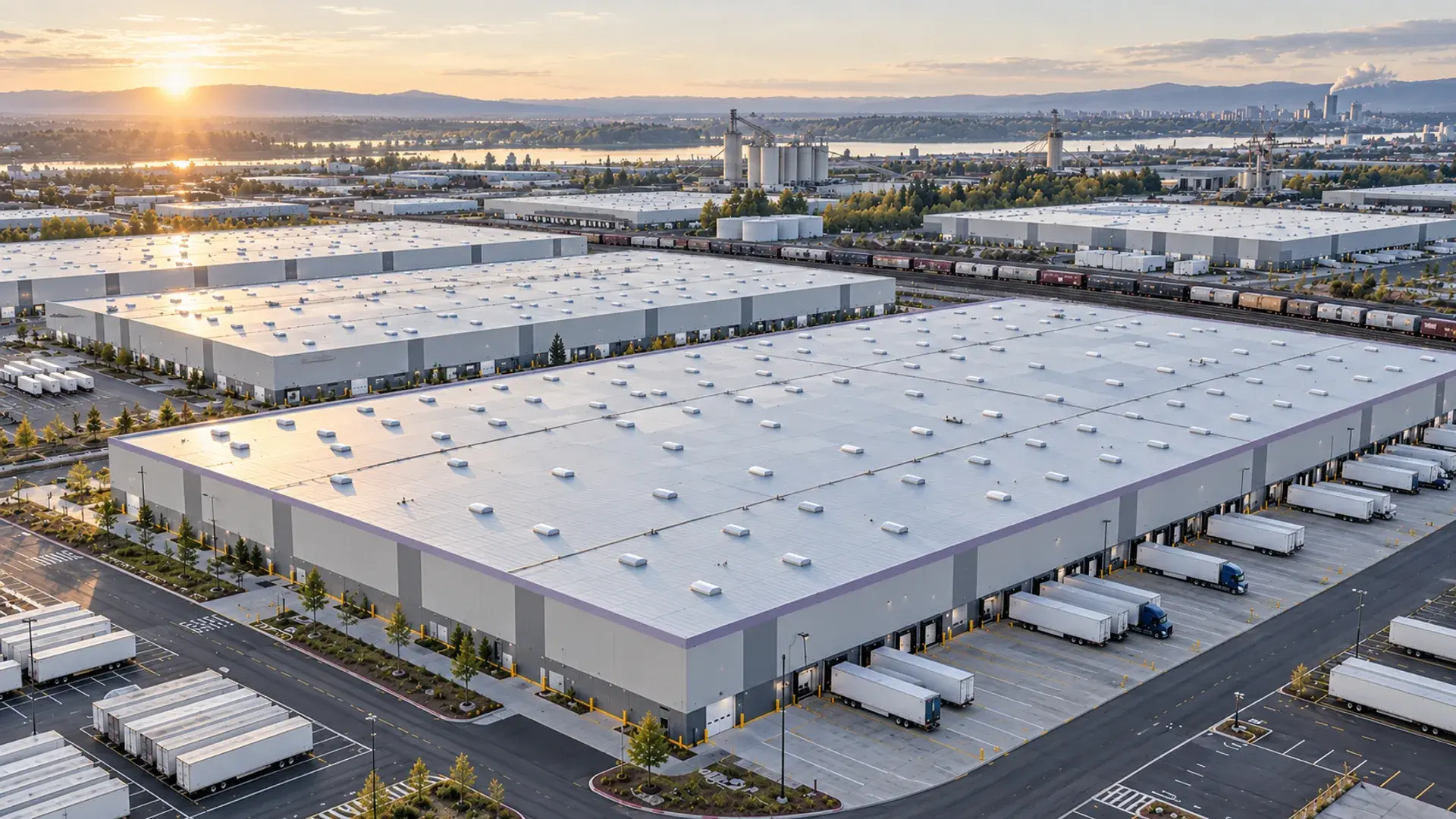
Warehouse roof work involves more than locating a large flat surface. Access restrictions, operating hours, stored inventory, and the existing roof system all affect whether the property is a suitable sales target.
Segment industrial properties by operations
A distribution center, cold-storage facility, food-processing plant, and heavy manufacturing site may all have extensive low-slope roofing, but their operating constraints differ. Cold storage introduces vapor and condensation concerns; food facilities may impose hygiene and contamination rules; active production sites can restrict shutdowns; logistics centers need uninterrupted dock operations. The sales team should know which environments match its experience before ranking warehouse roofing leads.
Include approximate building area, operating use, location, and whether the roof may contain many penetrations, skylights, or rooftop systems. Those visible characteristics inform research, not a definitive roof specification. Surface imagery cannot establish hidden insulation condition, deck integrity, or warranty status. A large industrial roof with an unusual assembly may require specialist partners or fall outside your accepted service range.
Filter commercial flat roof leads by work type
“Flat roof” is a shorthand, not a complete description. Low-slope commercial assemblies vary in membrane, insulation, drainage, attachment, and structural requirements. A contractor specializing in single-ply replacement may not be equipped for every metal, built-up, modified-bitumen, or specialty industrial application. The qualified list should be built around the systems and scopes the business can price responsibly.
Ask whether the sales objective is emergency leak repair, recurring maintenance, targeted upgrades, or full replacement. These jobs have different access and decision routes. A warehouse with an apparently large roof may produce only minor service work in the near term. A manufacturing plant undergoing a broader expansion may present roofing scope through a general contractor rather than direct owner procurement.
How can I get warehouse roofing contracts without waiting for a bid board?
Warehouses make useful prospecting targets because they have sizable roofs and identifiable operators, but a contractor should qualify the operating environment before pitching. A distribution center may need work scheduled around trucks and inventory; a food facility may have stricter shutdown rules; an owner-occupied plant may approve work locally while a leased site routes it through an asset manager.
Begin with industrial buildings inside your service territory. Use the CapXos commercial-roof map to locate candidates and compare the property context. Then screen each candidate for your technical strengths, access capabilities, minimum project scale and whether the roof is under the control of the operator, owner or external facilities team. A contact for a loading-dock repair is not automatically authorized to purchase a whole-roof replacement.
A practical first offer is often a documented condition review or a discussion about planned maintenance. If the buyer requests an inspection, the team can use CapXos Inspect to organize photographs and observations and Takeoff to capture measured quantities. The result is a clearer path to estimating than sending a generic “we replace flat roofs” message to every warehouse in town.
Screen warehouses for work you can actually win
A warehouse corridor is an attractive territory only when the buildings match your crew's systems, travel range and operating capacity. Begin by selecting a small cluster of industrial addresses. Check their commercial classification and available roof context, then separate buildings worth a maintenance conversation from sites whose roof age or history justifies investigating a possible capital replacement. Large roof area matters to project value, but not to whether the owner is ready to buy.
Warehouse prospecting is easier to manage when each target has an address and a reason to investigate. Search logistics districts and industrial parks on the CapXos commercial roof map, then compare commercial roofs against your operating radius and preferred systems. Property Snapshots can supply more detail where the source data support it. For cold-storage, distribution and manufacturing sites, follow up with the facility operator to understand access rules and production constraints before suggesting any roof visit.
Research industrial ownership and purchasing routes
Industrial buildings may be owner-occupied or leased. The property owner can control the roof while the operating company controls access and work windows. Facility managers may handle service, while corporate real estate or capital-project teams oversee replacement. Establish these relationships before contacting a tenant about roof work it cannot authorize.
For industrial roof replacement opportunities, identify whether the site is a standalone owner-operated facility or part of a national portfolio. Record facility addresses separately from corporate offices. Large accounts may use vendor qualification portals or centralized procurement. Do not assume that an operations manager at one site can award contracts across an entire network.
Combine credible signals without diagnosing a roof remotely
Roof age, publicly available permits, imagery, maintenance references, and local weather history can guide research. But each signal has limits. A construction permit may relate to HVAC equipment or an addition rather than a reroof. A recent industrial expansion may add new roof area without changing the older portion. A severe storm over a warehouse cluster does not establish damage at any given facility.
Use a confidence-based shortlist. Mark documented roof-section history separately from assumptions, and assign a question to resolve during a proper inspection or owner conversation. If there is evidence of a planned capital project, record its public source and current stage. If no project is confirmed, the facility remains a research prospect rather than an active job lead.
Plan around operational risk
Industrial customers may ask about shutdown windows, hot-work permits, dust or odor control, rooftop equipment protection, traffic management, and fall-protection planning. These topics cannot be settled by marketing data. They should be discussed early so a salesperson does not promise a work sequence that field operations cannot provide.
A useful qualification note identifies facility type, likely procurement team, working-hour restrictions, known hazards, and whether a roof consultant or engineer is involved. The operations team should review unusual sites before sales commits to a budget estimate or timeline. Screening protects margins and prevents wasted bids on work outside the company's capabilities.
Organize a manageable industrial territory
Rather than collecting every warehouse in a state, select clusters your service branches can support. Separate distribution centers, manufacturing facilities, cold storage, and owner-managed industrial campuses. Use your established building profile, verify names and account roles, and record a concrete follow-up. Track which categories produce inspections and proposals, not just how many sites appear on a map.
CapXos can support early commercial-property and roof research, while field teams and owners confirm system type, condition, budget, and access. That combination can make industrial roofing leads more defensible: the research identifies suitable buildings; sales qualifies potential projects; estimating evaluates actual roof work. A researched address becomes an opportunity only after the site and decision process have been verified.
Build a shortlist of industrial sites where your company has relevant references and can realistically mobilize crews. Check those roofs on the free CapXos map, then verify building control and access restrictions before making contact. Offer an authorized condition review, not a speculative replacement claim. Request a demo through the homepage if industrial property prospecting is a regular sales objective.
Frequently asked questions
Where can I find warehouse and industrial roofing leads in my area?
Research industrial buildings within your service radius and screen for roof-system fit, facility operations and the right purchasing contact. A building list starts the process; a genuine lead requires a credible reason and permission to discuss work.
Are all warehouse roofing leads suitable for low-slope commercial contractors?
No. Facility use, roof system, size, travel distance, operational constraints, and purchasing process determine fit.
Does a large roof mean an industrial facility needs replacement?
No. Roof size identifies potential project scale, not condition or budget. Replacement need requires evidence and on-site assessment.
Who should receive an industrial roofing proposal?
Confirm whether the owner, facility manager, corporate real estate team, or general contractor controls the project. The tenant using the building may not hold that authority.