Finding More Commercial Roofing Opportunities Through One Property Owner
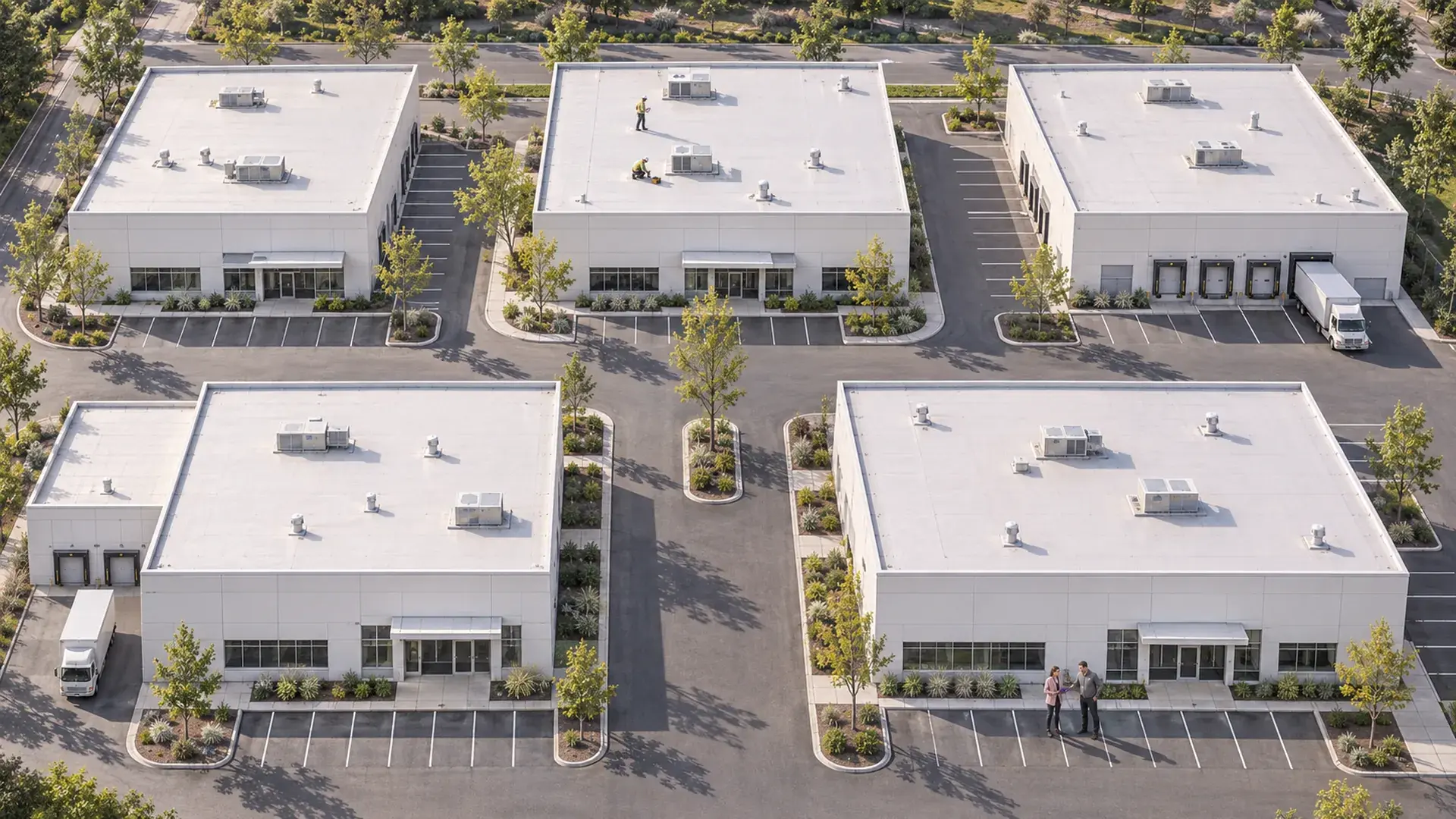
One successful commercial roof job can open the door to another property held by the same owner. The useful sales opportunity is an introduction through an established relationship, not a database search for every building in a corporate group. Researching a commercial property owner portfolio is useful only after the contractor connects the right legal entity, roof and facilities decision-maker.
Identify who controls the properties
Begin with the exact address of a building the team already knows. Check the legal owner, managing agent and any parent organization visible in reliable records. Large companies often hold properties through separate limited liability entities, while a management firm may operate roofs it does not own. Similar company names are clues, not enough to prove common ownership. Confirm relationships before suggesting that the organization controls another address.
A useful property register contains the site name, owner or entity, building type, estimated roofing system if known, records reviewed, contact route and who can authorize inspection. Keep owner and manager fields distinct. Even within one portfolio, different regional facilities teams may issue work orders. Someone who approves roof repairs at a single site may not be authorized to discuss the other buildings.
Assess each roof on its own facts
The appeal of multi property roofing leads is that one relationship may produce repeat conversations with fewer introductions. That advantage disappears if the contractor makes sweeping claims about all the roofs. Review permit history, weather context and available imagery for each site separately. A roof recorded as replaced recently should not be treated as an immediate reroof prospect because another building in the same group is old. Likewise, proximity to a storm is not evidence of an insurance claim or physical damage.
Use https://capxos.com/ to examine the commercial buildings associated with an account one at a time. Property Snapshots may add information for individual sites where coverage permits. Keep ownership relationships verified through appropriate records rather than assuming neighboring buildings share an owner. The value for a roofing contractor is a better-informed portfolio discussion, not an automatically generated list of authorized jobs.
Approach the portfolio manager with a bounded offer
A contractor who has successfully handled one facility can propose a consistent way to document others. Start with an existing business issue: recurring service calls, inconsistent roof records, upcoming maintenance plans or difficulty comparing replacement priorities. Offer a limited pilot for one or two locations with an agreed inspection scope and reporting format. Portfolio managers may be more interested in comparable information than in another broad sales proposal.
For an unfamiliar owner, the first objective is to identify the relevant facilities or asset manager, learn how suppliers are approved, and understand whether roof maintenance is locally or centrally managed. Some portfolios use preferred-vendor agreements or procurement rules. Do not imply that access to owner data means the contractor has permission to contact every tenant or enter every roof.
Estimate the value of a relationship realistically
One introduction can save prospecting time, but each potential job must still clear the same requirements as a stand-alone project: suitable roof system, budget, access, competitive procurement and accurate scope. Group sites by near-term maintenance, possible capital projects and research-only. If the owner manages 20 buildings, the relevant opportunity might be two inspections this quarter, not 20 immediate replacements.
How do I find other buildings owned by the same company? Begin with the legal entity associated with a customer you already know, then check whether related companies actually own or manage the other addresses. Keep each property separate because the roofs, budgets and vendor rules may differ. A contractor may wonder, “Can one commercial roof customer lead to more roofing jobs?” Yes, a facilities manager may introduce a contractor to another site after a successful repair. That introduction is still subject to procurement and the manager's authority. Ask permission to discuss one additional property before offering a sweeping portfolio-wide contract.
A contractor completing a repair at one retail property might ask whether the same client oversees nearby industrial sites. That is a specific account-expansion conversation: identify the other addresses, confirm the relationship, and ask which facility manager handles maintenance there. Keep the first completed repair as evidence of service quality, but don't send a portfolio-wide proposal without the owner's permission. Each additional roof needs its own access plan, records and scope.
Start with one more roof, not an entire portfolio
Before offering to examine an owner's entire portfolio, request permission to review one additional site. It tests whether the property connection, vendor relationship and reporting process actually work. Research those commercial roofs at https://capxos.com/ or ask for a walkthrough of the property data available. Use Inspect and Takeoff on authorized visits so each building produces its own record, rather than one vague multi-site estimate.
Frequently asked questions
Can a management company be responsible for buildings it does not own?
Yes. Distinguish legal ownership from property management and verify which party approves inspection, maintenance and capital work.
Should every building in a portfolio receive the same offer?
No. Roof ages, warranties, use restrictions and existing service arrangements vary by location.
Is ownership data always complete?
No. Property records may use separate entities, stale names or incomplete relationships. Check important connections before outreach.