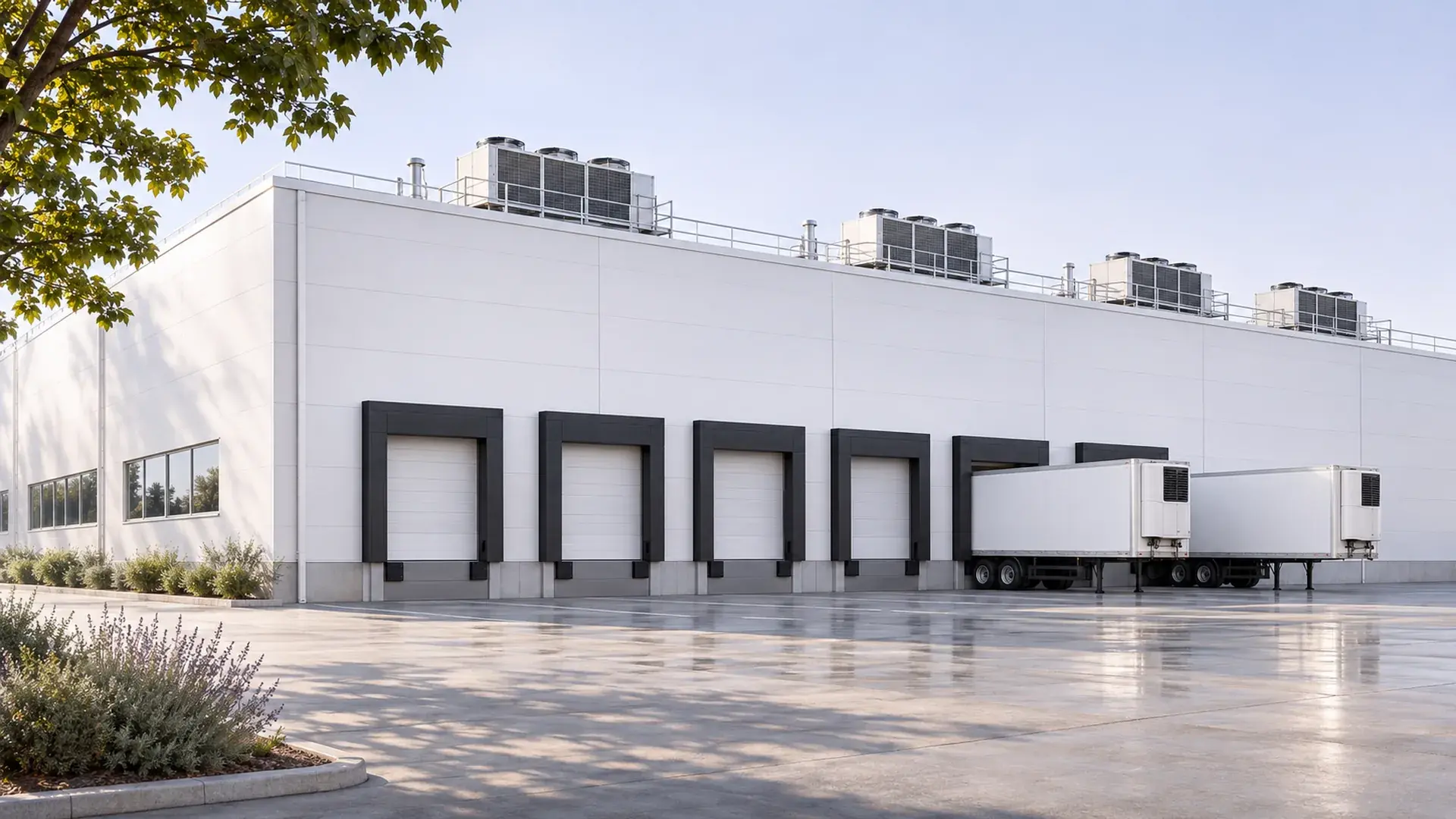
Cold-storage warehouses and food-processing plants impose operating conditions that ordinary industrial roofs often do not. A crew may be asked to protect temperature-sensitive inventory, work around continuous production, meet hygiene rules and avoid introducing moisture or odors. Cold storage roofing contractors pursuing this segment need to qualify those requirements before treating a large roof as an attractive sales opportunity.
Identify the facility's operating constraints first
Different buildings in this category have different risks. A refrigerated distribution center may have loading operations running around the clock. A food-processing plant may require hygiene controls, restricted access, documented contractor procedures and coordination with quality teams. Roof penetrations, condensation concerns and mechanical equipment can complicate even a minor service visit. A contractor should establish which of these conditions apply before promising a repair schedule or estimating a replacement.
Food processing facility roof repair decisions often involve more than a property manager. Operations leadership, maintenance engineers, food-safety staff and procurement can all influence contractor approval. The commercial opportunity may begin with an inspection request, but the project can only proceed after access, contamination controls and safe work methods have been agreed. A generic sales pitch that ignores the operating environment is unlikely to progress.
Screen buildings for fit rather than counting square feet
Start with facilities inside the company's realistic service territory. Review the approximate roof footprint and any reliable information about the existing assembly, rooftop equipment and previous roof work. Public permits may reveal relevant construction activity, but details can be incomplete. A recorded alteration may be unrelated to the roofing scope. Avoid assuming that a high energy load or older facility proves that the roof needs replacement.
The commercial-roof map at https://capxos.com/ can help locate candidate cold-storage or food facilities and review available property context. It will not establish hygiene requirements, roof assembly details or whether a plant has approved contractors. Those questions belong in the facility qualification call. A Property Snapshot may support further property research where information is available.
Speak to the right maintenance and procurement teams
An initial approach should ask how the facility handles roof inspection and service without disrupting production. Some plants use approved contractors and strict training or insurance requirements; others ask a local property manager to coordinate routine work. Request the appropriate facilities contact and ask about vendor onboarding before suggesting a roof visit. Do not request entry to production or roof areas without permission.
A practical offer might be a planned roof-condition assessment, documentation of flashing around mechanical units, or a review of maintenance records for an upcoming capital cycle. State the limits of the assessment. A roof inspection cannot by itself establish whether insulation is wet throughout the assembly or whether a vapor-control problem has been solved. Specialized testing and design advice may be needed, and appropriate professionals should be involved.
Develop scopes suited to occupied facilities
For an authorized project, ask about production shifts, odor and fume restrictions, temporary protection, equipment shutdowns, emergency access and scheduling windows. A roofing plan that is technically sound but conflicts with critical operations may never be approved. Record roof sections separately so the owner can consider phased work. Where appropriate, distinguish routine maintenance from a more extensive replacement proposal, including the operational costs of each option.
How do I get roofing work at refrigerated warehouses? Lead with the operational requirements: protecting temperature-sensitive inventory, controlling moisture and odors, arranging safe roof access and maintaining production. A price-first pitch often fails before the buyer even discusses a scope. The next question is, “Who hires roofers for food processing buildings?” Plant engineering may define the technical work, food-safety staff may control site procedures and procurement may approve the vendor. Identify the decision route and qualification rules, then propose a relevant assessment or repair capability. The best introduction shows that the roofing team understands the operational cost of an interruption.
For a refrigerated facility, even an apparently simple penetration repair may demand careful coordination. Work above food storage or sensitive production areas can require special containment, scheduled shutdown windows or restrictions on materials and odors. These requirements affect whether the job is profitable and whether the roofer is qualified to bid. A prospect list should therefore have space for operational constraints, not just square footage and owner contact. When the facility asks about capacity, explain the company's actual experience and provide a plan for obtaining the missing information before quoting. A small, well-defined service call can be the beginning of a useful relationship, but only if the crew can meet the site's rules.
Prove fit for a sensitive facility
For a first approach to a cold-storage account, prepare evidence of the company's relevant safety and technical experience before requesting a walkthrough. Use https://capxos.com/ to research the facility's commercial roof and request a demonstration if this sector will be part of regular prospecting. Once the plant approves access, Inspect and Takeoff can organize findings and quantities for the permitted scope.
Frequently asked questions
Are cold-storage roofs always candidates for replacement?
No. Age, construction, maintenance and operating conditions vary. A responsible assessment is needed before proposing a scope.
Does a food facility require special contractor approval?
Often it does. Confirm site-specific hygiene, safety, insurance and operational procedures with the facility.
Can property records reveal moisture inside the roof assembly?
No. Public records may guide questions, but moisture problems require appropriate technical investigation.