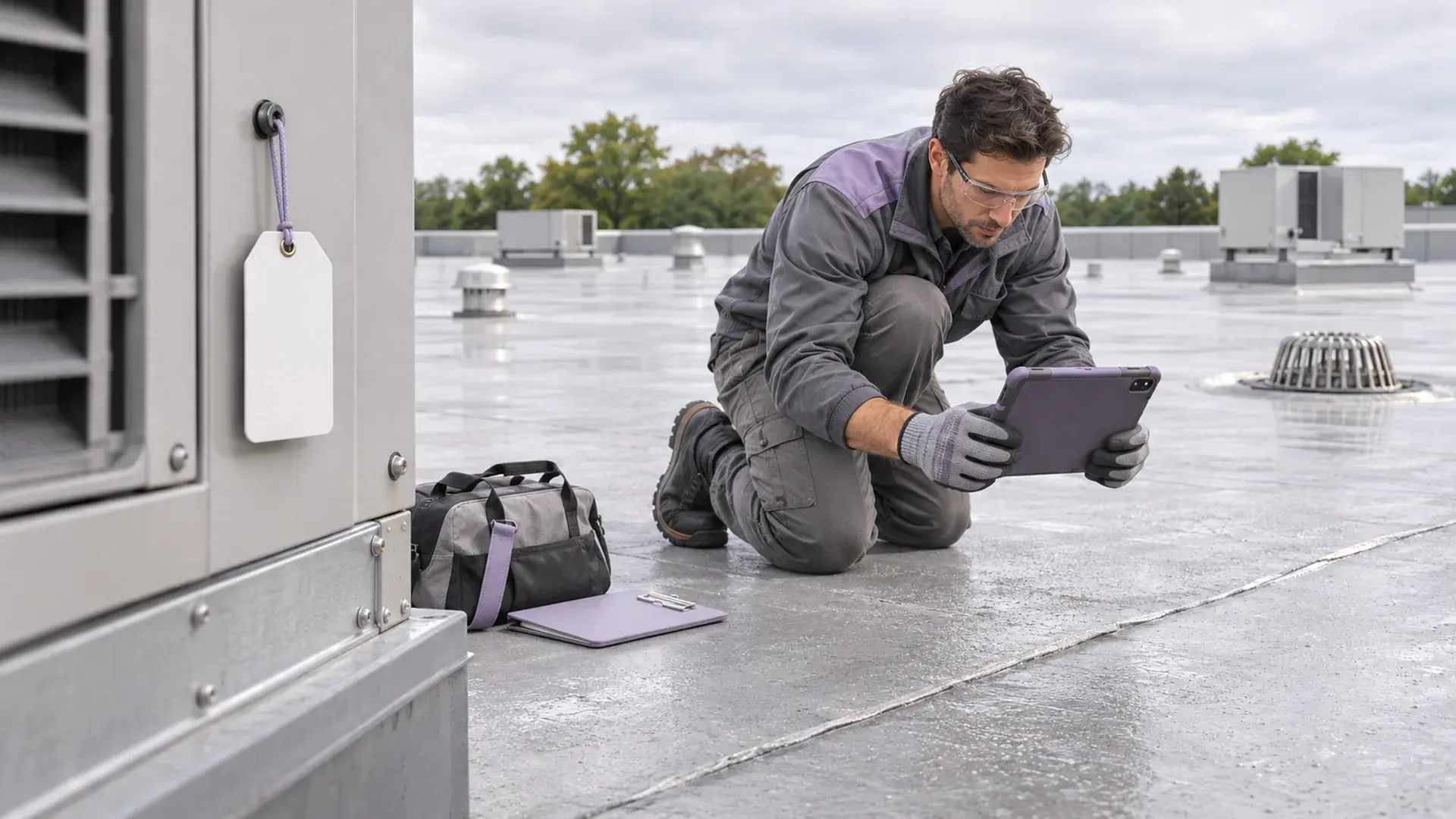
A first inspection is an opportunity to demonstrate competence, not a guaranteed gateway to a large replacement contract. The owner may want reassurance, a leak diagnosis, a maintenance plan or quantities for budgeting. Commercial roof inspection leads become commercially useful when the roofing contractor gives the customer clear evidence, a realistic scope and an understandable next decision. Pressuring every customer toward replacement can destroy the trust that brought the company onto the roof.
Clarify the reason for the inspection before arrival
Ask who requested the visit and what prompted it. A property manager investigating a recurring leak needs different information from an owner updating an annual capital plan. Confirm which roof areas can be accessed, whether an existing warranty or service contract applies, and how findings will be used. A defined inspection scope prevents disagreement over whether the contractor was expected to inspect every section or only the reported problem area.
For new commercial roofing maintenance customers, provide a concise description of the deliverable: observations, photographs, limitations, areas requiring further review and any appropriate repair recommendations. Explain whether additional diagnostic testing is included. Do not promise to locate a concealed leak source from surface observations alone, and avoid presenting preliminary roof-age estimates as authoritative condition findings.
Make findings easy for the facilities team to act on
Take clear photographs tied to roof sections and explain each concern in plain language. Distinguish urgent safety or water-entry issues from routine maintenance items, and note what is already functioning adequately. If the inspector sees a possible defect but cannot confirm its cause, describe the uncertainty and a reasonable next test. An honest report sometimes says no immediate work is needed. That conclusion may strengthen the company's relationship with the owner more than an unnecessary bid would.
When a contractor has identified and qualified a potential commercial property, CapXos can support both ends of the process: research the building at https://capxos.com/ and use the free Inspect tool to document findings from an authorized visit. Takeoff can help capture quantities for a proposed scope. The owner decides whether the report leads to a repair, further investigation or routine maintenance.
Translate findings into options the buyer can compare
Avoid burying the client in a list of unprioritized defects. Explain which items need immediate attention, which might be addressed during planned service, and which call for further evaluation. If two repair approaches are possible, show what each covers, expected access requirements and major exclusions. If a full replacement is relevant, distinguish that capital option from a maintenance repair. Owners need to understand the decision, not merely receive a total price.
Ask how the property approves work orders, which supplier requirements apply and whether a second visit is necessary for final measurements. When presenting estimated quantities, identify assumptions and any changes that field verification could reveal. A proposal grounded in photographs and measurements is easier to review than a generic price with no traceable scope.
Offer follow-up that respects the owner's schedule
At the end of the report, ask whether the owner wants a maintenance reminder, a repair quote or a planning discussion before the next budget cycle. Record that choice and follow up at the agreed time. A quarterly check-in may be appropriate for some facilities; others use annual inspections or respond only when an issue occurs. Do not assume that a one-time inspection gives the contractor permission for unlimited solicitation or automatic work orders.
How do I turn a roof inspection into paid repair work? Start with a report that the owner can use: photos linked to roof locations, observed conditions, scope options and any testing still required. Ask whether the next decision concerns a repair estimate, ongoing maintenance or more investigation. A contractor may ask, “Can one commercial roof inspection lead to repeat jobs?” It can, when the visit is accurate, the follow-up is timely and the customer actually needs more work. An honest report finding no repair requirement is still a valuable service and can establish the trust needed for future maintenance conversations.
A clear repair proposal should be traceable to the inspection findings. If the report identifies three flashing concerns on separate roof sections, the estimate should identify which items are included and what remains outside the scope. This lets the manager approve a limited repair without misunderstanding it as a comprehensive roof restoration. After the work, provide completion notes and agreed photographs so the building team can maintain its service history. Future work is more likely when the owner can locate the prior information and understands why an additional assessment or maintenance visit is being suggested.
Agree on the customer's next decision
Before leaving the site, agree on who receives the report, how repairs will be approved and whether the customer wants a follow-up date. That is the bridge between a useful inspection and future paid work. CapXos offers commercial-roof research at https://capxos.com/; Inspect and Takeoff can support the documented visit and measurements. A demonstration can show how the tools fit the contractor's prospect-to-estimate process.
Frequently asked questions
Does every commercial roof inspection need a repair recommendation?
No. A finding of acceptable condition or a need for further diagnosis may be the most accurate outcome.
Can a contractor use inspection photos for marketing?
Only with appropriate permission and without disclosing confidential customer or property information.
When should a roofer propose a maintenance agreement?
After understanding the owner's needs, existing contracts and desired service scope, not as an automatic add-on to every visit.