Commercial Roof Maintenance Planning: Build a Schedule That Prevents Guesswork
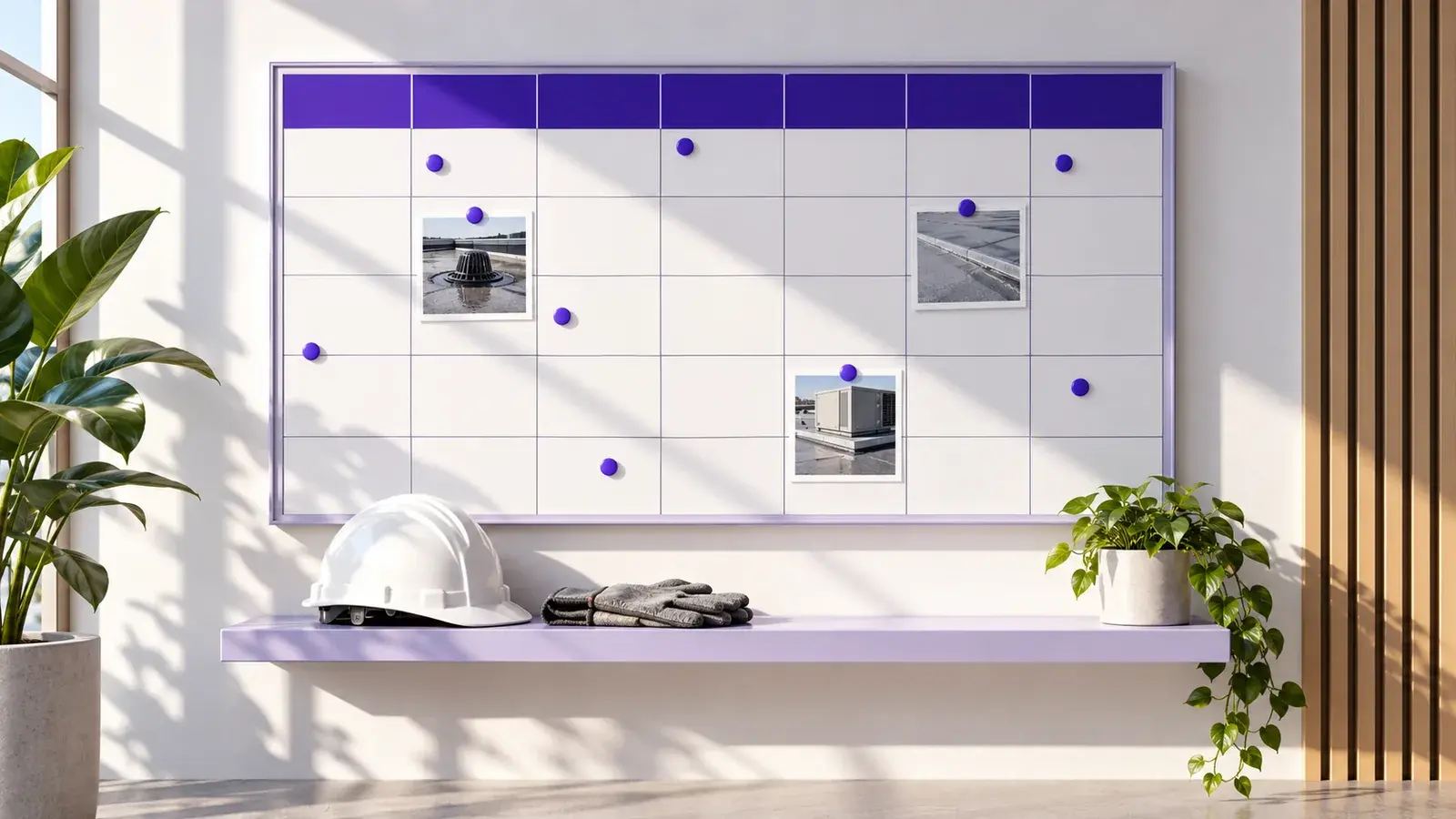
Maintenance programs fail less often because someone forgot the word “inspection” and more often because no one owns the next action. A usable commercial roof maintenance plan tells the property team which section is due for attention, who can authorize access, what evidence will be retained and when an unresolved issue must return for review.
Create a roof register before scheduling visits
Start with every building and roof section under the team's responsibility. Record the system type if known, installation date and evidence, warranty documents, drainage locations, rooftop equipment, access rules and recent service history. Identify sections separately where materials or installation dates differ. A single property-level “roof is 15 years old” entry can hide important differences.
The register should identify who can authorize access and who receives findings. If a facility is leased, roof responsibility may be divided between tenant and owner. Confirm those responsibilities rather than assuming the staff member who reports a leak can approve corrective work.
Set inspection timing around risk and obligations
Example maintenance board for one property
This illustrative register separates schedule, action and accountability. It is not a universal manufacturer-approved inspection interval; the issued warranty, local conditions and safety rules determine the actual plan.
| Trigger / due | Task and location | Owner | Closeout evidence |
|---|---|---|---|
| Quarterly review | Check open roof-service tickets | Facility manager | Open-items register |
| Spring / fall plan | Authorized roof-section inspection | Qualified roofer | Dated photos, conditions, follow-up |
| After significant storm | Review event and arrange safe inspection | Facility manager | Event date and inspection decision |
| After HVAC contractor work | Verify affected curbs and penetrations | Project manager | Before / after photos, sign-off |
Many property teams use spring and fall as useful planning points, with additional checks after significant weather events or rooftop work. But the appropriate cadence depends on the roof assembly, manufacturer requirements, occupancy and local conditions. Review the actual warranty and maintenance instructions before setting an interval.
For a published example of a manufacturer maintenance document, see the GAF commercial scheduled maintenance materials. The issued documents for the actual roof take precedence over any sample calendar.
A site with heavy HVAC traffic may need more attention around curbs, walk pads and penetrations. A tree-lined retail property may require more frequent drain clearing. A storm-exposed coastal facility may need an extra documented check following a specific event. Uniform frequency is easy to administer but can miss concentrated risk.
Make each visit produce an actionable record
Separate routine housekeeping, observable deficiencies and situations requiring specialist assessment. A technician can photograph debris at a drain and record that cleaning was performed. An open membrane seam needs a location, measured extent and decision on repair. Suspected trapped moisture should be recorded as a concern, not presented as confirmed without appropriate testing.
Use the commercial roof inspection documentation checklist as the field-level companion. Maintenance planning begins where the checklist ends: assign an owner, target date, budget category and follow-up verification to every item that requires work.
Prioritize defects without guessing the repair method
Create three operational categories. Immediate attention covers active water intrusion, unsafe conditions and urgent access restrictions. Scheduled repair covers documented defects without an active emergency. Monitor covers observations that need reinspection or confirmation. The categories organize work; they do not substitute for professional judgement about the underlying roof system.
If water is entering an occupied building, coordinate an appropriate qualified response. For routine defects, preserve photos before and after repairs and record the contractor's description of the completed scope. Future teams need to know what was actually repaired, not merely that a ticket was closed.
Connect maintenance to capital planning
A useful annual plan separates operating expenses from potential capital work. Track recurring repairs by roof section, unplanned callouts and areas with persistent drainage issues. Those trends can indicate where a deeper condition assessment is justified. High maintenance cost alone does not prove replacement is warranted, but it should prompt a documented evaluation.
Where an owner manages multiple buildings, compare consistent categories across properties instead of letting the loudest complaint determine the budget. A roof with a known defect near critical operations may outrank a larger but stable roof. Clearly distinguish observed condition from future cost estimates.
Keep the plan current when buildings change
New rooftop equipment, solar installations, tenant improvements and storm repairs can alter access and maintenance requirements. Update the register whenever construction occurs. Request as-built details and relevant warranty implications before assuming an existing system remains covered.
The free web-based CapXos Inspect and Takeoff tools let teams keep photos and dictated field observations tied to roof sections, produce inspection records, and organize measured areas, lengths and counts. These tools help document a maintenance visit; scheduling obligations and approval workflows still need to be managed by the property team. The goal is a repeatable record that can be used by the next technician, not a folder of unlabeled photos.
Frequently asked questions
How often should a commercial roof be inspected?
Follow manufacturer and warranty requirements, site-specific risk and qualified professional advice. Semiannual planning is common, but no single schedule applies to every roof.
Does routine maintenance extend commercial roof life?
It can help detect and address problems earlier, but the outcome depends on the roof system, conditions and workmanship. No maintenance schedule guarantees a particular lifespan.
What should a commercial roof maintenance log contain?
Record date, roof section, conditions observed, photos, work performed, responsible party, source documents and follow-up date.
Should property managers treat every roof leak as a replacement project?
No. A qualified assessment should determine the cause and appropriate scope. Some leaks are localized; others indicate broader system or substrate problems.
Can a maintenance plan help contractors retain service customers?
Yes, when it creates reliable inspection records and timely, clearly scoped follow-up. It should provide genuine property value rather than automatic recommendations for unnecessary work.