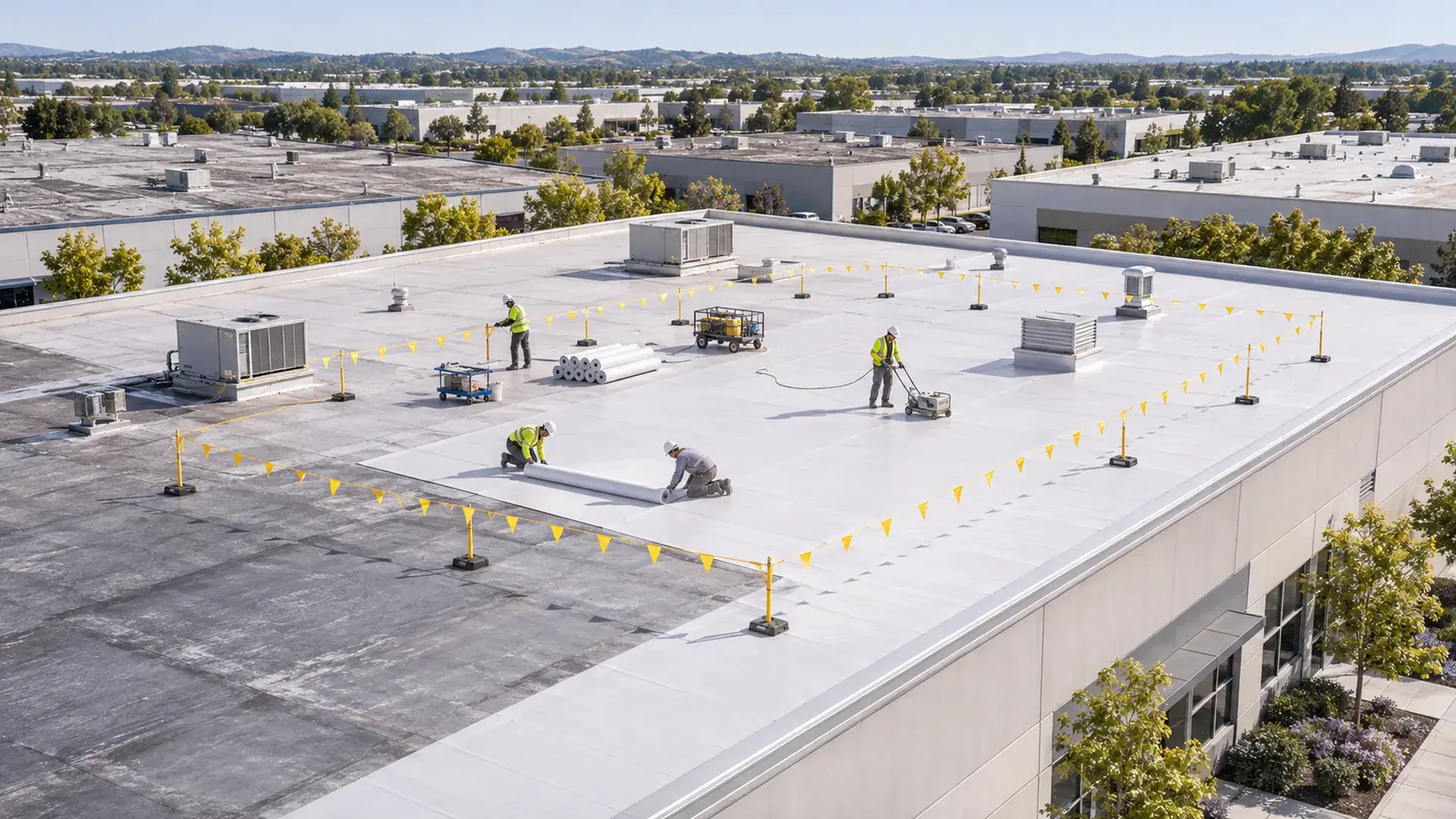
A roofing contractor already working at a distribution center has a natural advantage in that neighborhood: the team understands travel time, local access conditions and the kinds of roofs nearby. Commercial roofing route prospecting uses that knowledge to research suitable properties near scheduled work. It does not mean approaching occupied facilities without permission or treating every roof visible from the road as a sales lead.
Start with a real job location
Take the address of an authorized project and identify adjacent commercial districts within a practical driving radius. The useful radius varies with traffic, inspection scope and the company's schedule. A small repair crew may have time to meet one nearby facilities manager; a major reroof crew may be committed to a site for several weeks and only need a long-term prospect list. Keep prospecting activities separate from the contractual duties and safety requirements of the existing job.
Look for local commercial roofing opportunities that fit the same skills already in use. A company mobilized for a low-slope warehouse system may find similar industrial properties nearby. A contractor serving an office park may research other managed buildings in the same business district. Do not assume comparable roof condition from visual similarity. Neighboring buildings may differ in installation date, warranty status and ownership.
Research the buildings before leaving the office
Check real addresses, property types, approximate roof characteristics and available records. Mark which sites merit a simple introductory call and which need additional investigation. A property map can help identify the relevant structures and avoid confusion between a tenant's business address and the roofing asset. Make sure the contact is current and that a facilities discussion is welcome before arranging an on-site meeting.
Open the map at https://capxos.com/ around the crew's next scheduled commercial job and mark nearby buildings that genuinely fit the company. Review available roof information in advance and contact managers through normal business channels. Keep the existing customer and any protected site information out of prospect materials. CapXos supports the property research; it does not provide permission to approach or inspect neighboring roofs.
Respect the current customer's property and reputation
A crew should not use a customer's job site as a base for unapproved marketing, distribute other clients' project photographs or imply an endorsement. If a neighboring business asks about the work, answer accurately and direct the inquiry through a normal sales channel. For planned outreach, explain that the company services commercial properties in the area and can offer an assessment if requested. Do not mention confidential details about the customer whose project brought the crew nearby.
A local introduction can be simple: identify the type of roof system the company works on, explain normal service coverage and ask who handles maintenance for the building. A manager may already have a roofer; if so, note any legitimate future vendor process and avoid aggressive follow-ups. The objective is to build useful relationships at lower travel cost.
Measure whether nearby outreach actually works
Track incremental travel time, conversations with responsible managers, inspections authorized and jobs awarded. Some routes will produce few opportunities; others may reveal a cluster of buildings operated by one property-management firm. Use those results to choose future target areas. Do not measure success by the number of addresses collected from a map. A qualified appointment at a nearby building is the relevant outcome.
How do I find roof jobs near my current project? Begin with the address of an existing appointment and research a small cluster of surrounding commercial buildings before the crew travels. Proximity can reduce the cost of separate sales calls, but it does not authorize unsolicited access. A crew leader may ask, “Can I use one roofing site visit to find nearby commercial clients?” Yes, through separate, respectful outreach to verified contacts; the paid customer's property and information must stay confidential. Schedule introductions outside the contracted work and leave the original job undisturbed.
For example, a service technician could be scheduled to inspect a roof in an industrial subdivision on Wednesday. The office can research three nearby commercial properties before that visit and identify whether any have a relevant facilities contact. Calls should happen through ordinary business channels rather than during the customer's paid inspection time. If one manager agrees to a conversation, schedule it around the existing job without reducing the promised attention to the original client. Record the outreach result separately so the company can assess whether local clustering reduces travel cost without disturbing current service quality. A route-based system is useful only if it protects the job that made the trip possible.
Protect the existing job while prospecting nearby
Make a route plan the evening before the existing job: one paid appointment, a short list of nearby prospects and separate, permission-based follow-up. If the prospecting stops delaying fieldwork, keep the process; if it disrupts the current customer, stop. Use the free commercial-roof map at https://capxos.com/ to select suitable addresses and request a demonstration if the crew wants to repeat the method across territories.
Frequently asked questions
Is a nearby business automatically a qualified roofing prospect?
No. Confirm the roof system, decision-maker and whether the owner has any relevant need.
Can the contractor tell prospects about a nearby customer's job?
Only with permission and without disclosing confidential information. General experience is safer than implying endorsement.
What is the biggest advantage of route-based prospecting?
Reducing unnecessary travel and improving familiarity with local building types, while keeping outreach respectful and specific.