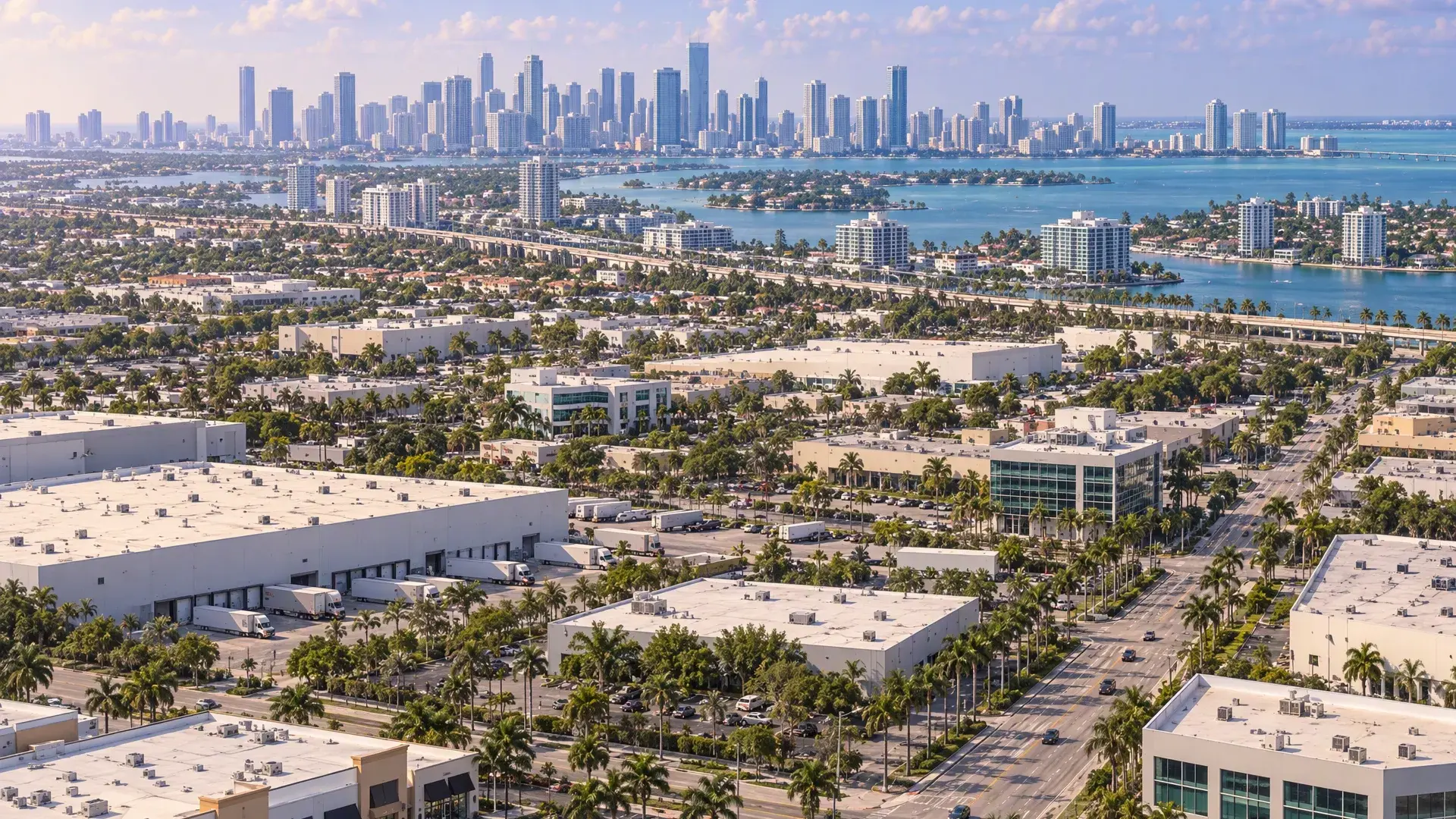
Miami offers unusually rich roofing data, but it is not a market to treat casually.
The county has strict roofing requirements, a deep permit trail and constant hurricane exposure. That gives contractors more data than in many markets, but it also means a generic list of old buildings is not enough.
The useful question is which properties are approaching work and fit the contractor's actual capabilities.
Start with the current market numbers
At the time of review in October 2026, the Miami data covered 52,041 commercial buildings across Miami-Dade and neighboring CapXos coverage:
- 777 roofing permits in the trailing 12 months;
- 24,878 roofs flagged high-risk;
- a median roof age of 31 years;
- 88% of buildings with known roof age past 15 years.
These figures are provided for context; current values may differ. The Miami commercial roofing page is the source to check before outreach.
Age alone cannot narrow the Miami market enough. With 88% of known-age roofs past 15 years, other filters are necessary.
Permit history is unusually important in Miami-Dade
Miami-Dade maintains a dedicated roofing permit process and published roofing forms. The county states that a new roof requires a permit, and its roofing permit resources include applications, roof-system forms, inspection tracking and contractor e-permitting for eligible work. Miami-Dade's roofing permit page lays out the current process.
That makes permit history useful for prospecting because it can help separate recent work from older roofs that have not produced a visible major reroof record.
Do not reduce the process to "no permit = bad roof." Use the permit record as evidence to research the property, not as a diagnosis.
Miami's High-Velocity Hurricane Zone changes the roofing conversation
Miami-Dade's roofing process reflects the High-Velocity Hurricane Zone. Roof assemblies, product approvals and inspections are a much bigger part of the local job than in many inland markets.
For sales teams, that changes who is a realistic prospect. A useful lead still has to fit your licensing, systems, property types and crew capacity. A high-risk roof that your company cannot properly bid is not a good lead.
Use hurricane exposure as context, not a scare line
South Florida owners do not need to be told that hurricanes exist.
A better approach is to use storm history to prioritize roofs where weather exposure overlaps with age and an older permit record.
CapXos' Miami scoring model combines age, system type, storm hits and permit history rather than ranking properties on a storm track alone. The live page also shows recent hurricane context and the roof score for individual sample properties.
For broader storm research, CapXos' Florida storm damage page connects hurricane history with roofing activity across the state.
Work by corridor or property type
Miami is too large and too varied for one undifferentiated call list.
Build smaller territories around the work you want: industrial and logistics properties, retail centers, multifamily, owner-occupied buildings, managed portfolios or roof systems your crews specialize in.
This makes route planning easier and makes the sales message more relevant.
Filter out recent reroofs before you start calling
A building can be old while its roof is new.
Use permit history to remove obvious recent replacements. Then prioritize properties where older roof age, storm exposure, a suitable property type and an identifiable owner or manager line up.
That turns 24,000 high-risk roofs into a list a salesperson can actually work.
Find the person who controls the next step
Commercial roofing outreach in Miami may involve the owner, property manager, facility manager, asset manager, association management, general contractor or regional facilities team.
Do not assume the tenant name on the building is the roofing decision-maker. Confirm who handles maintenance and capital work for the property.
Recent commercial roofing discussions consistently describe the segment as relationship-driven, with property and facility managers playing a major role. The first win may be an inspection or repair rather than a full reroof.
Give the outreach a Miami-specific reason
A generic "Do you need an estimate?" message gives the owner no reason to respond. A stronger approach explains that you are reviewing older commercial roofs in that part of Miami-Dade and want to verify current condition where no recent major reroof is visible. It creates context without claiming damage.
Use current data, not a stale exported list
Permit activity changes quickly. At the time of review in October 2026, the Miami market page showed hundreds of permits in the trailing 12 months, and the market data refreshes weekly. A list exported months ago can contain properties that have already been reroofed or entered an active project.
Before a high-value outreach sequence, recheck the property.
CapXos' commercial roofing hub shows the current Miami figures alongside the other covered metros, and the CapXos map lets contractors start with an address, city or ZIP.
Turn the lead into a field workflow
Once the property responds, CapXos can carry it from research into Inspect and Takeoff. Contractors can capture photos and voice notes, then organize areas, lengths and counts for the estimate. Inspect and Takeoff are currently free, while Property Snapshots add deeper property intelligence and contacts when available.
Frequently asked questions
How can I find commercial roofing leads in Miami?
Start with commercial properties that fit your target market, then use roof age, permit history, storm exposure and ownership information to rank them. Remove obvious recent reroofs before beginning outreach.
Are roofing permits required in Miami-Dade?
Miami-Dade requires permits for new roofs and maintains dedicated roofing permit applications, forms and inspection processes. Exact requirements depend on the property, scope and jurisdiction, so the current county or municipal rules should be checked for each project.
Why is Miami different from other commercial roofing markets?
Miami-Dade is in Florida's High-Velocity Hurricane Zone, which brings stricter roof-system, product-approval and inspection requirements. Hurricane exposure and a strong permit trail also make property history especially important.
Is an old Miami commercial roof automatically a good lead?
No. Miami has a large amount of older commercial roof stock, so age alone is too broad. Combine it with permit history, storm exposure, property type and current ownership or management data.
How does CapXos help contractors find Miami roofing opportunities?
CapXos combines Miami roof age, permit activity, storm exposure and property data to help rank commercial roofs. Contractors can then use the same platform for inspection notes and takeoff measurements as the opportunity moves forward.