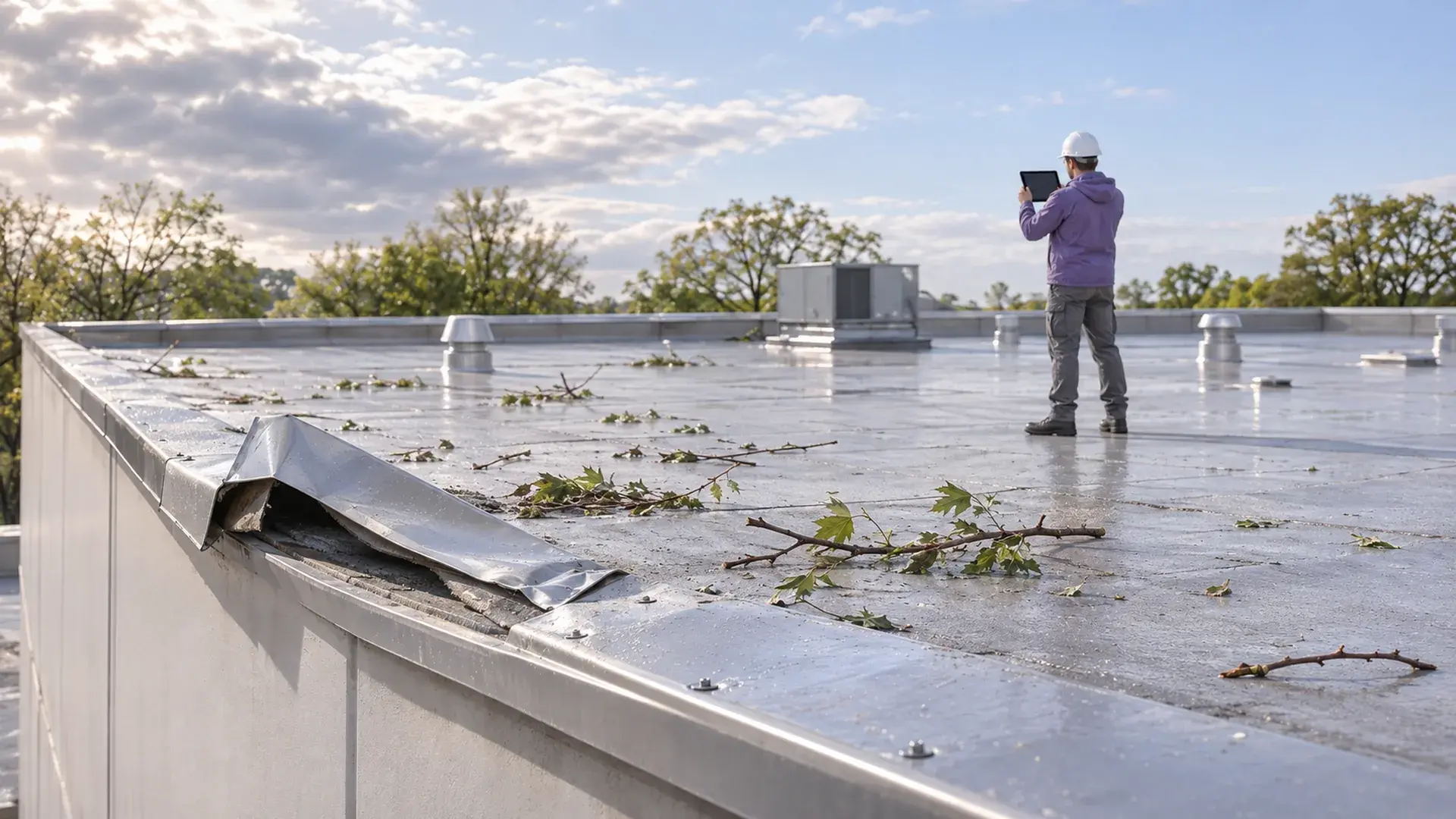
A strong wind event can increase the need for commercial roof inspections, especially where roofs have exposed edges, rooftop equipment or a history of vulnerable details. It can also leave many buildings completely unaffected. A contractor looking for commercial storm roofing leads must distinguish a weather event, a plausible need for inspection, and actual roof damage. Treating those three as the same thing creates unreliable sales claims and poor estimates.
Begin with the event footprint and building fit
Use credible weather reports to understand where high winds were recorded and what is known about their timing. Regional storm maps can be broader than the conditions at a particular address. Buildings within the affected area may have different roof designs, edge details, heights and maintenance histories. Select properties where the roofing company has the appropriate inspection experience and safe access procedures rather than contacting every business in a ZIP code.
Wind damage commercial roof inspection searches often come from property managers who want to document whether their facility requires attention. Those buyers need a responsible assessment, not an immediate replacement pitch. Explain what an inspection can cover: accessible membrane and perimeter conditions, flashing and roof-mounted elements, visible debris effects and documentation of findings. Any structural concerns should be referred to qualified professionals when needed.
Research individual properties carefully
Weather history and a roof's visible characteristics can help prioritize a call, but neither determines that damage occurred. Check available permit and age records for context, and recognize that they may be incomplete. A roof installed recently can still be affected by extreme weather; an older roof can remain sound. Avoid sorting solely by age or claiming that a property score is a damage estimate.
With CapXos, a contractor can explore commercial roofs in an affected area at https://capxos.com/ and review the weather and property context available for individual addresses. That is useful for planning legitimate outreach, but it is not a remote damage diagnosis. If a facilities manager authorizes a check, the free Inspect tool can help organize observations made on site.
Contact the facilities team without pressure
After an event, building managers may be juggling power restoration, tenant concerns and safety checks. A respectful message asks whether roof inspections have been completed and offers qualified assistance if appropriate. Do not tell an owner that their roof is damaged based solely on their presence inside a weather map. Do not imply that an insurance carrier must pay for a replacement. If immediate access is unsafe, discuss scheduling once the facility is ready.
Property managers responsible for several sites may need a consistent inspection method and clear photographs. Clarify which locations are authorized and whether any emergency mitigation is required. If a storm response contractor is already in place, the new company can ask about vendor requirements for future events rather than interfering with current work.
Turn observations into a defensible scope
After authorized access, photograph and describe actual conditions by roof section. Distinguish new findings from pre-existing wear where reasonably possible, and state uncertainty. A leak may have causes unrelated to the storm; roof damage assessment may require professional evaluation beyond what a quick survey can establish. Keep measurements and proposed repairs traceable to observed details. This helps an owner evaluate a maintenance recommendation without depending on speculative language.
Which commercial roofs should I contact after a windstorm? Start with the affected territory, the roof systems your crews can actually inspect and property managers who may want a documented review. Weather coverage alone cannot establish damage at an individual address. The useful sales question is, “How do roofers find legitimate commercial work after high winds?” Confirm the responsible contact, explain the inspection service and seek authorization before visiting. Give the customer a factual report, including when the inspection finds no repair requirement. Trustworthy documentation matters more than claiming every storm-exposed building is a lead.
The contractor can also prioritize responsible documentation over immediate sales volume. Imagine two properties near the same wind event: a warehouse whose manager reports a new interior leak and asks for an assessment, and an office building with no reported concerns or inspection request. The first presents a concrete service conversation once safe access is arranged. The second remains a possible outreach contact but should not be described as damaged. This distinction is particularly important when an insurer or adjuster may later review the record. Photos, observations and the owner's report of what happened should remain separate from conclusions about cause and coverage.
Offer a credible post-wind assessment
After the event, the strongest first offer is usually a documented inspection option for facilities teams, not a replacement proposal. Keep the map-based shortlist separate from verified damage reports. Explore candidate commercial roofs at https://capxos.com/ or ask for a demonstration of CapXos's property research. If a property manager requests an assessment, use Inspect to record what the crew actually sees.
Frequently asked questions
Does a high wind report prove roof damage at an address?
No. It is a reason to consider inspection when appropriate, but site conditions must be evaluated.
Can a roofer promise that an insurer will cover repairs?
No. Coverage is determined by the policy and claim process; contractors should document findings accurately and avoid guarantees.
Should outreach happen immediately after every storm?
Consider safety, the facility's circumstances and whether the team has a credible service to offer. Urgency does not justify misleading claims.