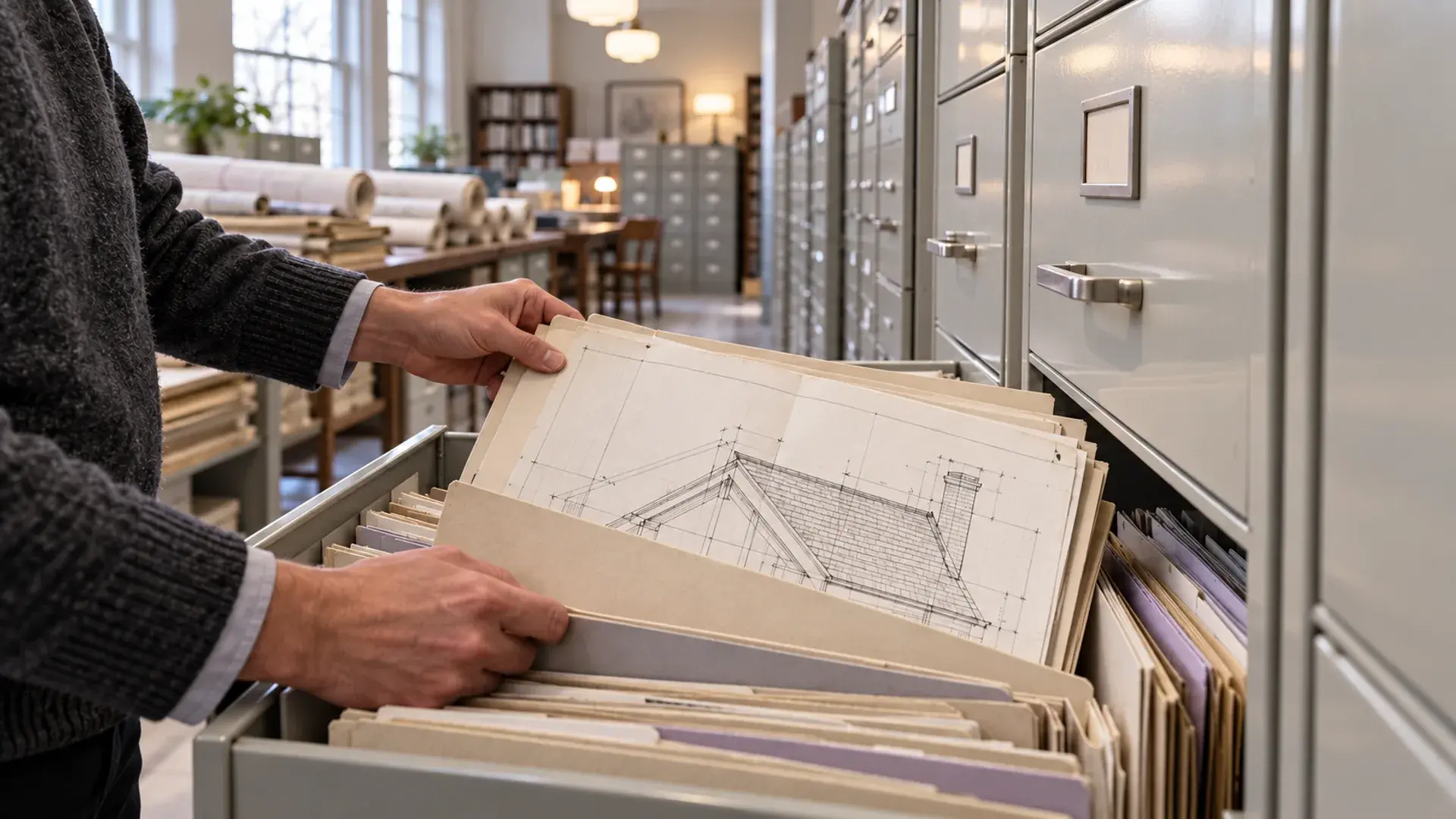
A newly issued reroof permit may describe a contract that has already been awarded. Contractors seeking new work need to investigate the building and project timing before treating the record as a lead.
Understand what a permit record can and cannot prove
Local jurisdictions vary in how they classify building work. A record might indicate a roof replacement, repair, recover, solar installation, rooftop mechanical equipment, tenant improvement, or full-building expansion. A permit issue date is not a construction-completion date and does not establish that work is still open for bidding. Some permits are amended or expire; others never reveal enough scope to identify the roofer.
For roofing permit leads, begin with the permit number, jurisdiction, parcel or address, recorded work description, applicant or contractor when lawfully public, status, and relevant dates. Preserve links to the underlying record. If the description is ambiguous, label the work as unverified rather than assuming reroofing. Two permits with similar addresses may refer to separate buildings or to the same project revision.
Look beyond direct reroof permits
Commercial roofing permit opportunities may arise indirectly from larger construction activity. Building permit leads for roofers can also point to related roof work. A warehouse expansion could include new roof area; a major HVAC replacement might affect existing penetrations; an exterior renovation could involve parapets, flashing, or drainage. The available roofing scope may be carried under a general contractor instead of a stand-alone roof permit. Research the full project context before calling it a commercial roofing permit opportunity.
Early-stage construction applications, planning-board materials, or publicly available project descriptions may offer more lead time than a permit already issued to a named installer. But they also carry uncertainty: proposed projects can be delayed, revised, or canceled. Use the public document to identify who controls the process and what decision stage is known. Do not represent an application as an approved, funded contract.
Can building permits help roofers find jobs that have not been awarded yet?
A permit can tell you that somebody applied for or received permission to perform a kind of work, but it may arrive late in the purchasing cycle. Searchers asking “how to get roofing leads from permits” often assume that a fresh record means a free contract. The first question should be whether a contractor is already attached to the project and what the permit actually describes. An HVAC permit on a building is a clue about activity, not a sign that its roof needs replacement.
Use the public record to locate the correct building, read the issuing jurisdiction's status and scope, then investigate the property. CapXos supports the building-level part of that process: explore the commercial roof map and review available property or roof information to see whether the address merits further research. A property that underwent work several years ago may be worth learning about for future service; an active awarded reroof is usually not a new bidding opportunity.
When outreach is appropriate, discuss a specific type of help the owner could authorize, such as inspections, maintenance or budgeting for later repairs. Keep “permit discovered,” “prospect researched,” and “buyer requested a bid” as separate entries. Combining them inflates the apparent value of permit-derived commercial roofing leads.
Use permit context to choose the next building to research
For prospecting, an old permit can be more useful than a newly issued reroof permit. The newer record may describe a project that already has a contractor. An older major-work record, considered alongside roof age and other available signals, can justify a closer look at a building that has not yet advertised a new project. That is a qualified research lead, not a claim that the site needs replacement.
A permit number becomes useful to a roofing salesperson only after the underlying building and project status are identified. Check the issuing jurisdiction and permit description, then search the corresponding commercial roof on the CapXos commercial roof map. Its map and available Snapshot data can help you research that site or nearby properties with similar characteristics. If the permit already names a contractor, treat the job as awarded unless you find reliable evidence otherwise. Look for adjacent or future work without claiming the existing permit is an open bid.
Match the opportunity to the likely buyer
A directly owner-funded roof replacement may involve a facilities department, asset manager, or roof consultant. Roofing within an industrial expansion may be purchased by the project's general contractor. A school project may require public procurement. The fact that a record lists an applicant does not establish the applicant's authority to discuss an unrelated roofing service.
Separate the property, project, contractor of record, and potential purchasing entity in your research file. If a roofing contractor is already named and the permit appears active, treat the specific scope as likely committed unless other evidence shows procurement remains open. The property may still be worth monitoring for future service, but it should not remain in a queue labeled “ready to bid.”
Build a permit-research workflow with clear stop rules
First, restrict the search to your service territory and commercial building types. Second, review descriptions manually or with auditable rules that distinguish roof work from unrelated construction. Third, check status and project timing. Fourth, compare duplicates and amendments. Fifth, identify whether roofing scope is already awarded. Finally, assign only defensible research opportunities to an account owner for lawful follow-up.
Stop when a project is outside your trade, already awarded, canceled, too remote, or impossible to qualify. A successful roof permit lead generation process should reduce wasted calls and document exclusions, not maximize the number of scraped permit rows. Measure verified opportunities and genuine project conversations instead of raw permit hits.
Combine public records with property context
Property use, building size, ownership information, and roof history can help determine whether a permit matters to a contractor. CapXos can support commercial property and roof investigation; external permit portals and project sources can then establish the jurisdiction's actual record. Coverage and freshness can vary, so always retain source dates and confirm the present status independently.
Avoid overstating what one data product knows. No public permit feed guarantees private bid invitations, current contractor availability, or the owner's next maintenance budget. Strong prospecting combines public records, disciplined interpretation, contact verification, and the contractor's real service capabilities.
Use permit signals to guide ethical outreach
A factual outreach note should not imply that the contractor is affiliated with the permitting authority or that a permit means the owner has requested bids. Reference verifiable project context and ask whether there is an appropriate vendor-qualification process or future related work to discuss. Follow applicable email, telephone, privacy, and procurement rules, and respect opt-outs.
The most valuable permit insight may sometimes be negative: learning that a reroof has already been awarded prevents your sales team from chasing it. A dataset that reliably filters false positives can be more useful than a larger list of speculative leads.
Take five recent permit records in your target territory. Determine which ones are already awarded, research the linked roofs or surrounding buildings on the CapXos map, and record a legitimate reason to contact each account. For addresses where more property context would be useful, consider a Snapshot. Request a demo from the CapXos homepage to see how property research complements your permit-search process.
Frequently asked questions
Can I get commercial roofing leads from permits without buying a list?
You can use public permit records to select buildings for research, then verify status, scope and ownership. Many permits describe work already arranged; a permit record alone is not an available roofing job.
Does an issued roof permit mean a roofing job is available?
Usually not by itself. In many cases a contractor has already been selected. Check scope, named participants, project status, and procurement stage.
Can permit records reveal upcoming commercial roofing opportunities?
They may reveal planning or construction activity related to roofing, but the actual scope and buying route must be verified. Early applications are also subject to change.
How is this different from looking up roofing permits by address?
Address lookup answers what a specific record says. Lead research evaluates whether public construction activity suggests a legitimate future sales conversation for the contractor.